4000 m · Gallery
One second to the exit.
Everything here is ours: our instructors, our passengers, our sky over Pomerania. One day of jumping, ground to ground.
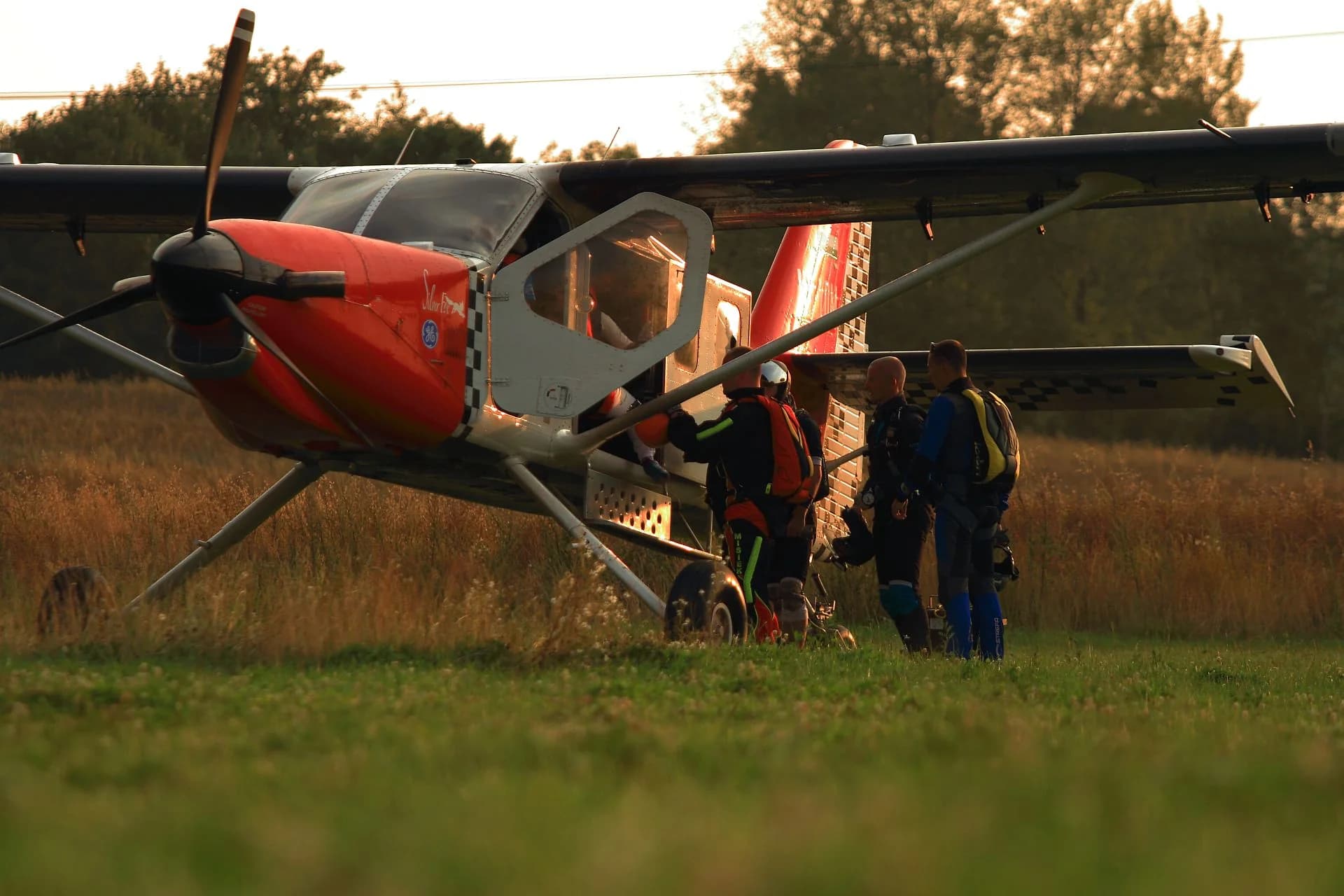
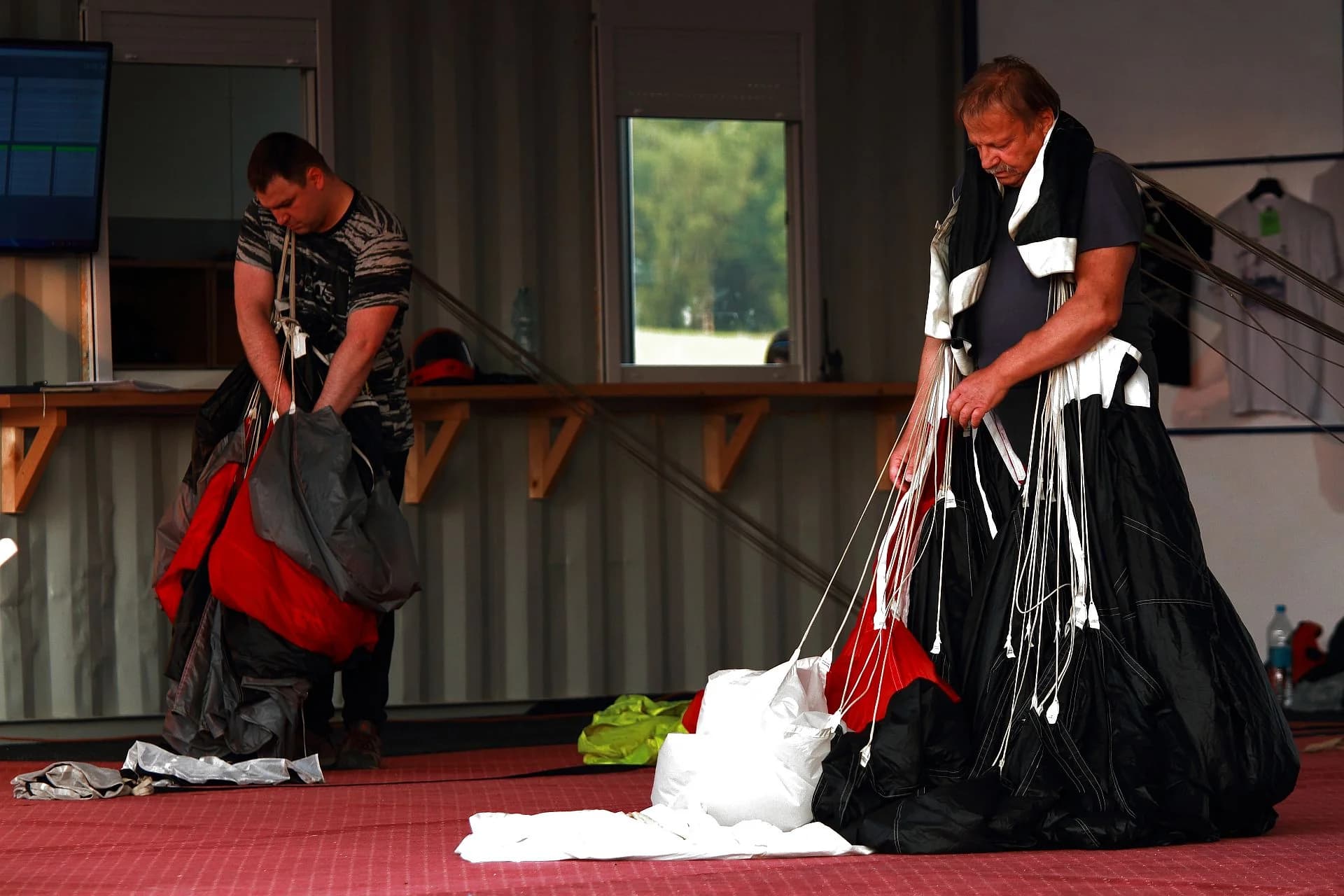
On the ground
The day starts slowly: planes in the grass, canopies on the tables, last questions.
0103
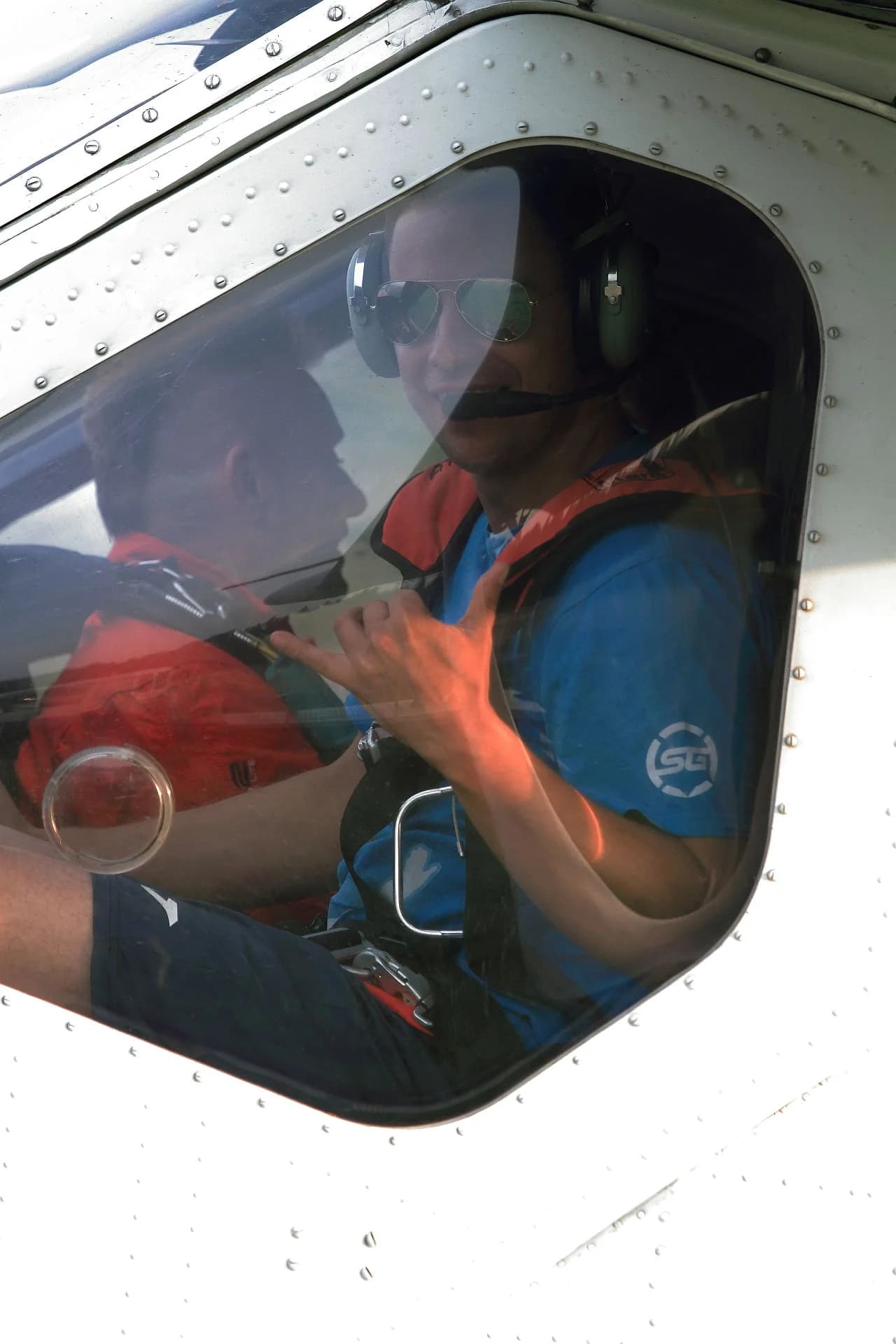
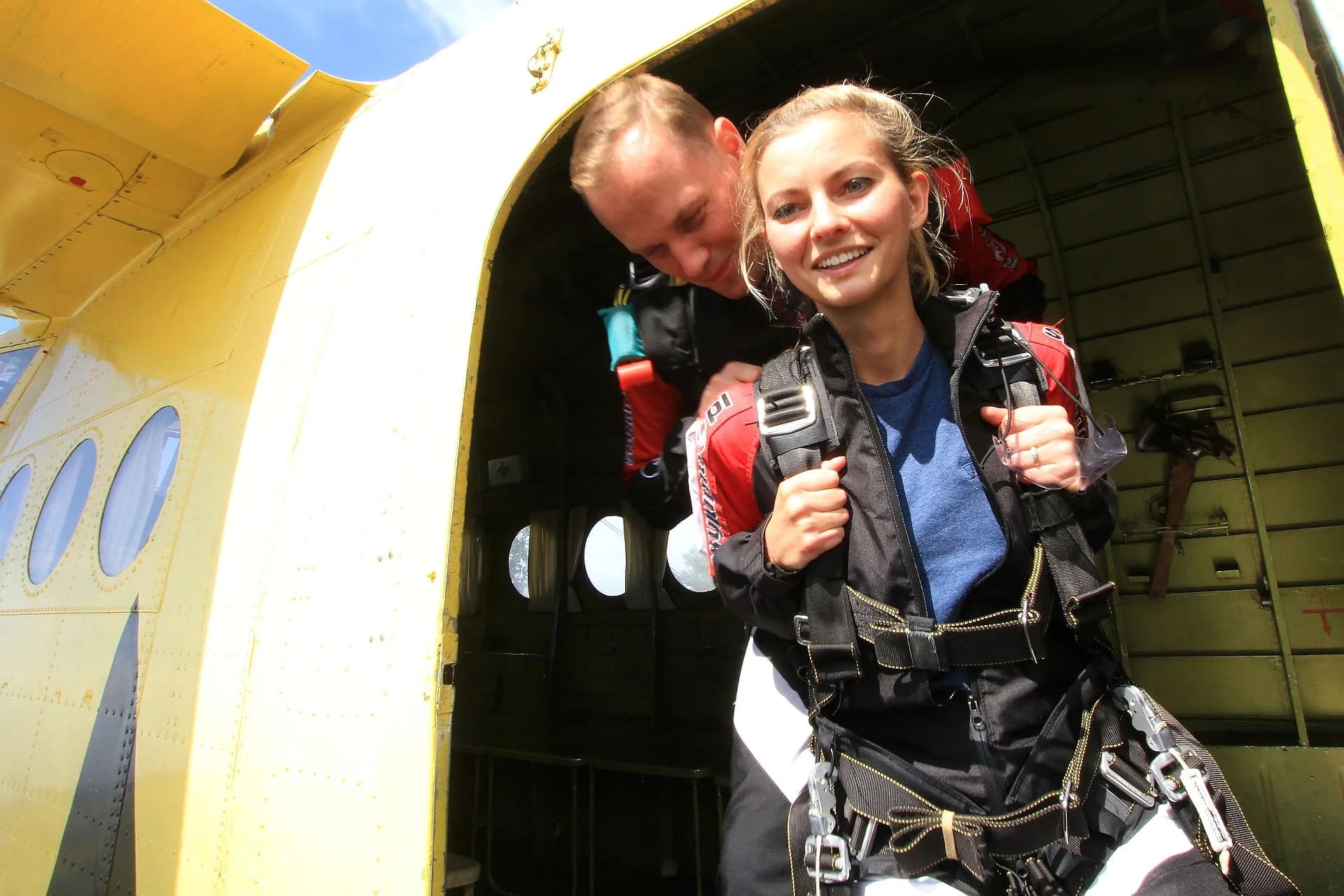
Going up
The door closes and the fields shrink. Four thousand metres takes a quarter of an hour.
0102
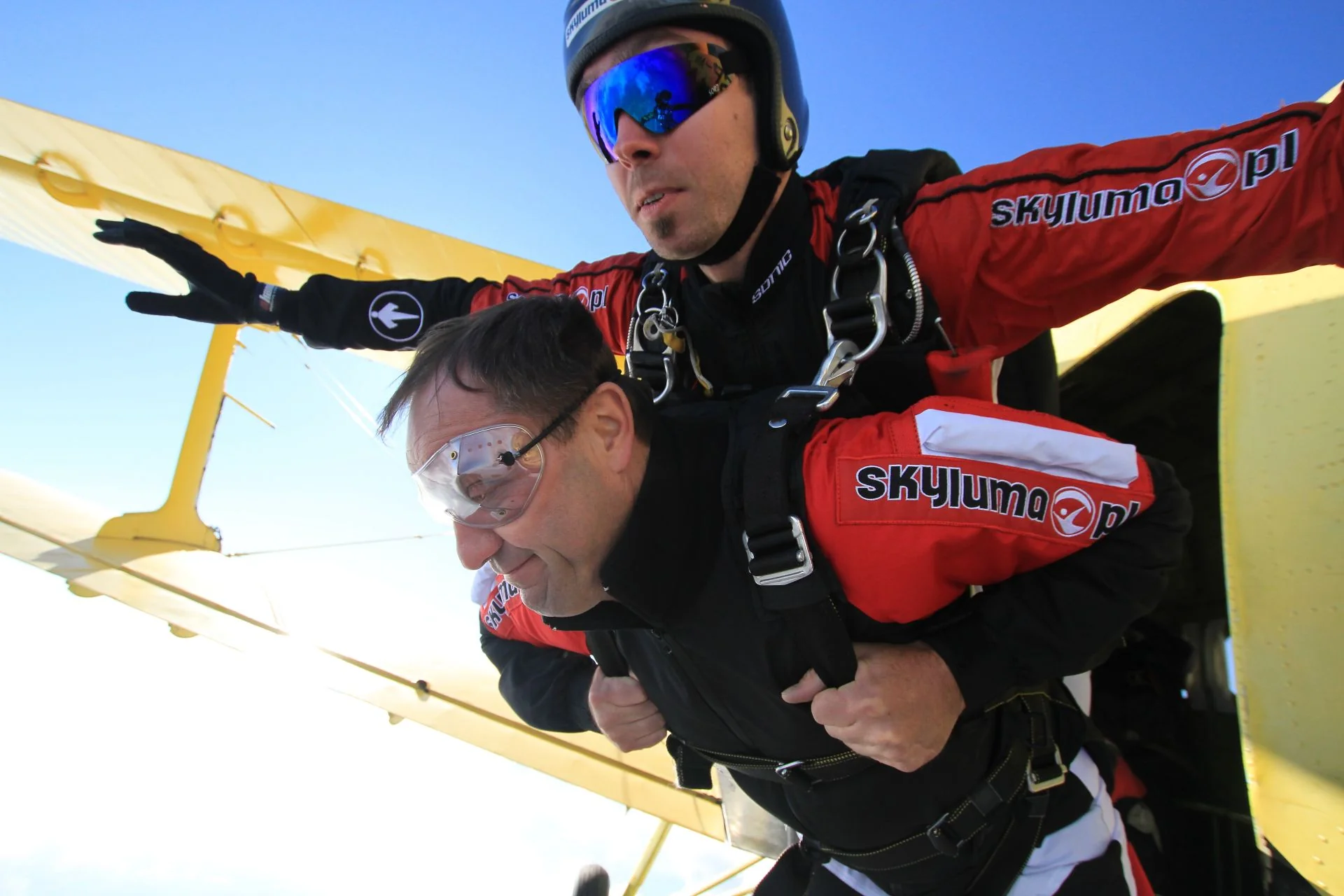
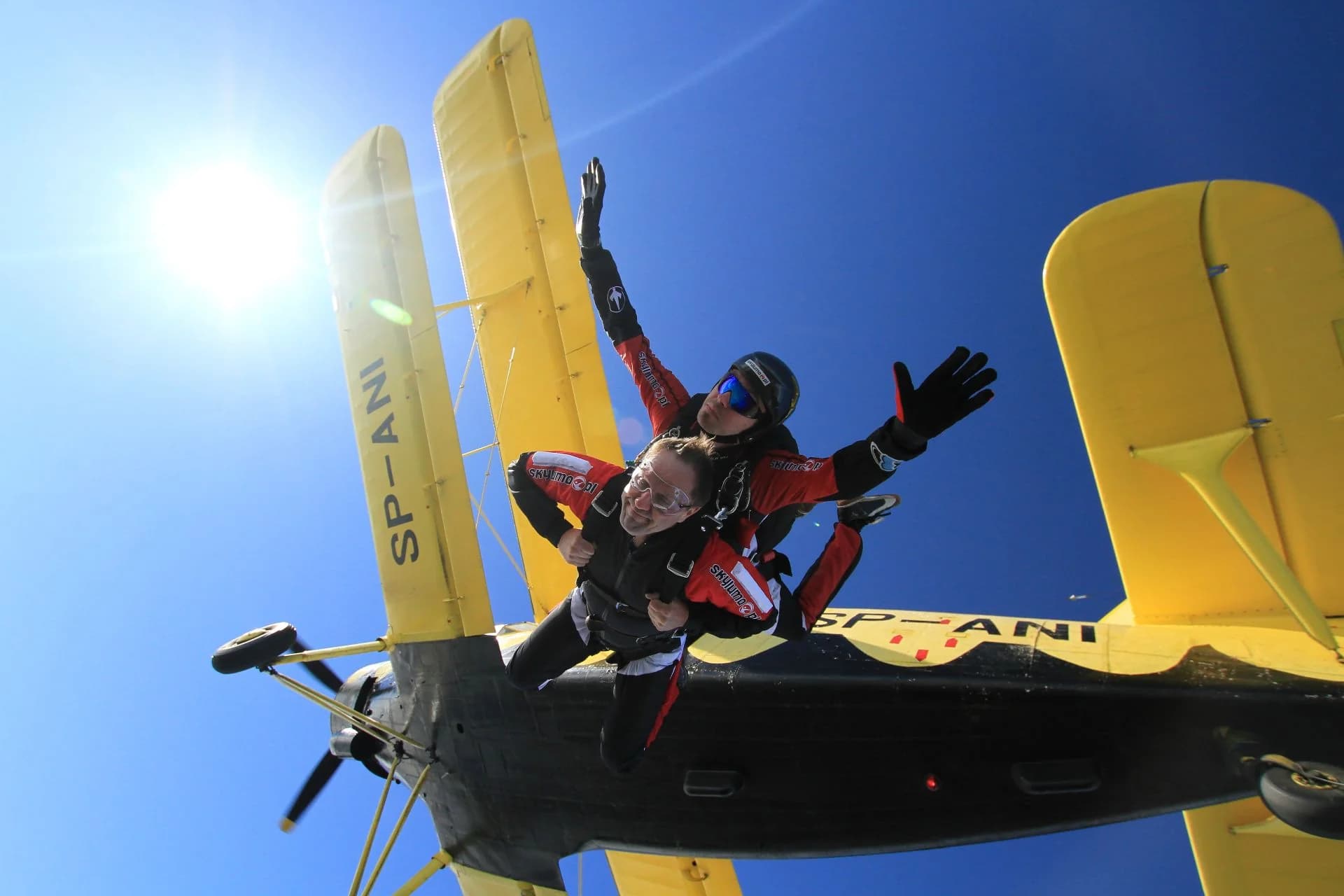
The exit
One second in which everything changes — the sill, the air, the speed.
0102
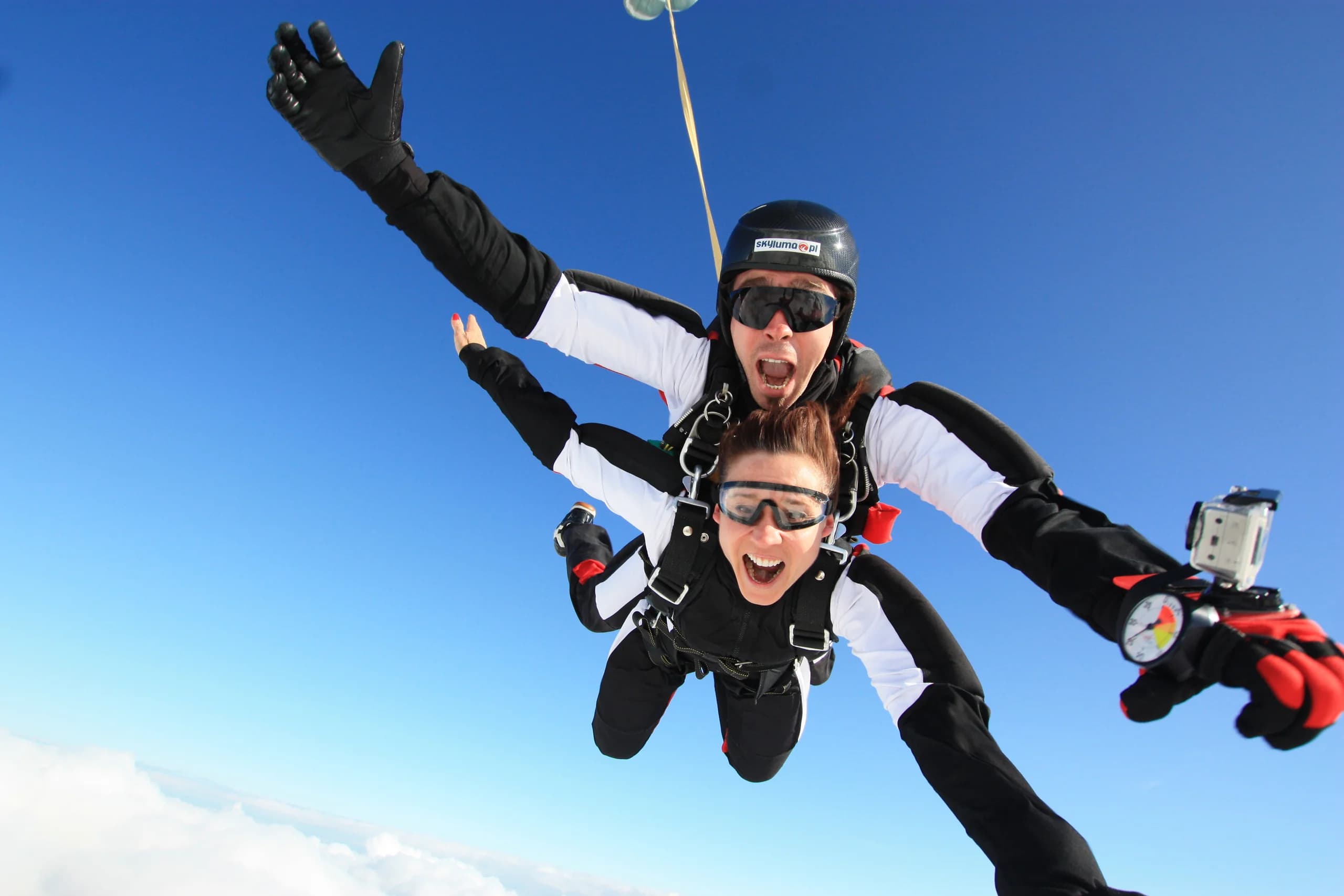
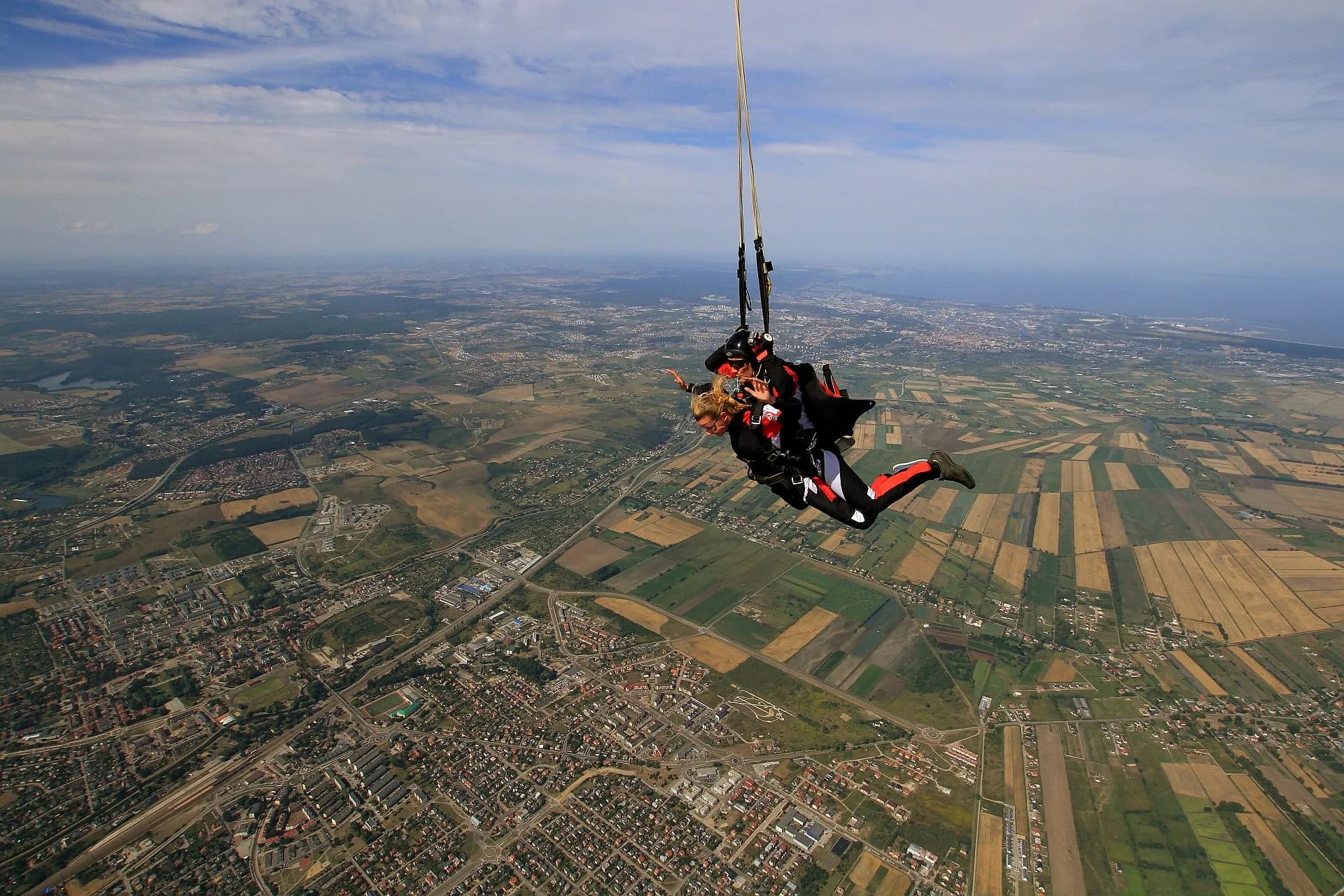
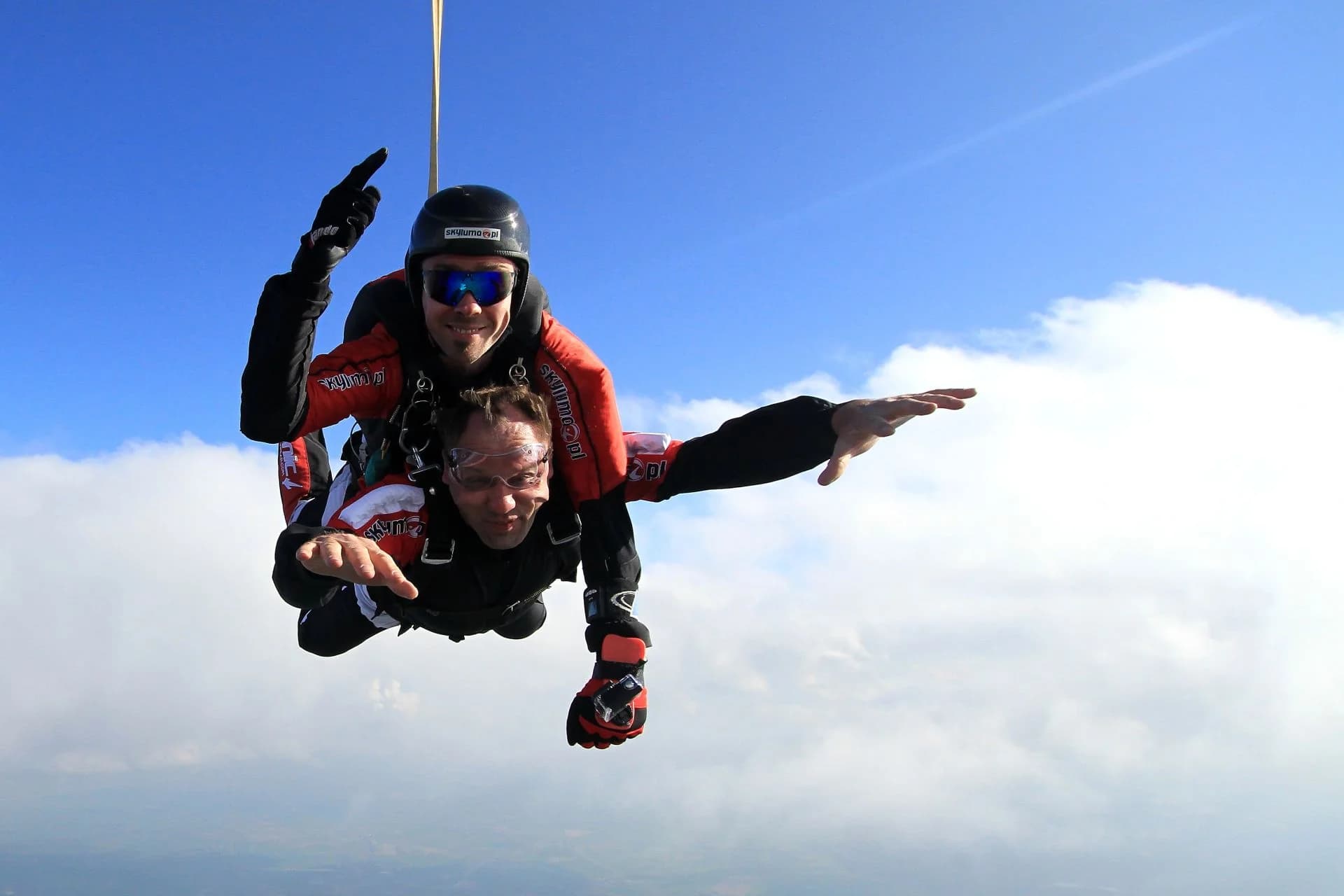
Freefall
About a minute at up to two hundred kilometres per hour. In the photos, always the same grin.
0106
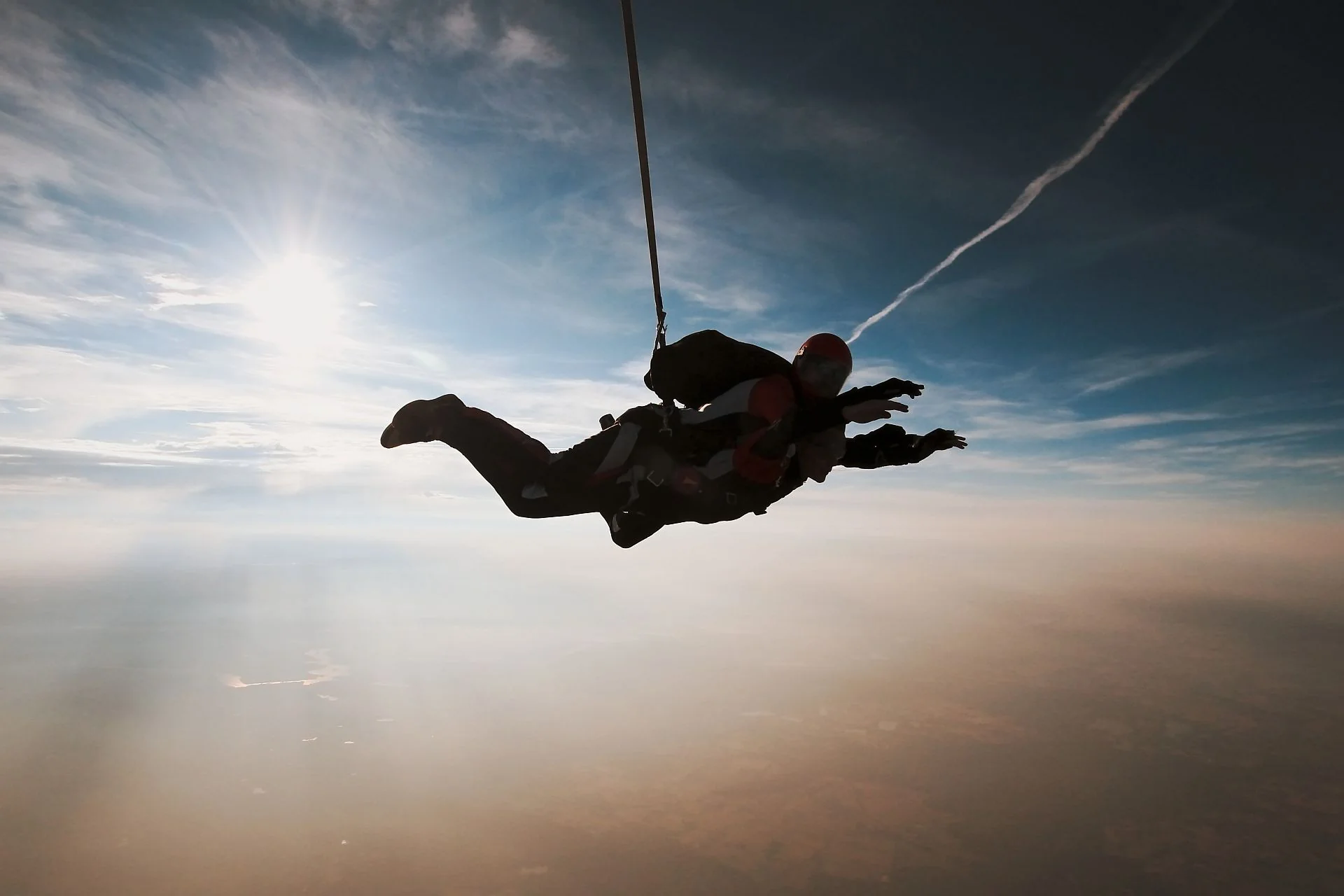
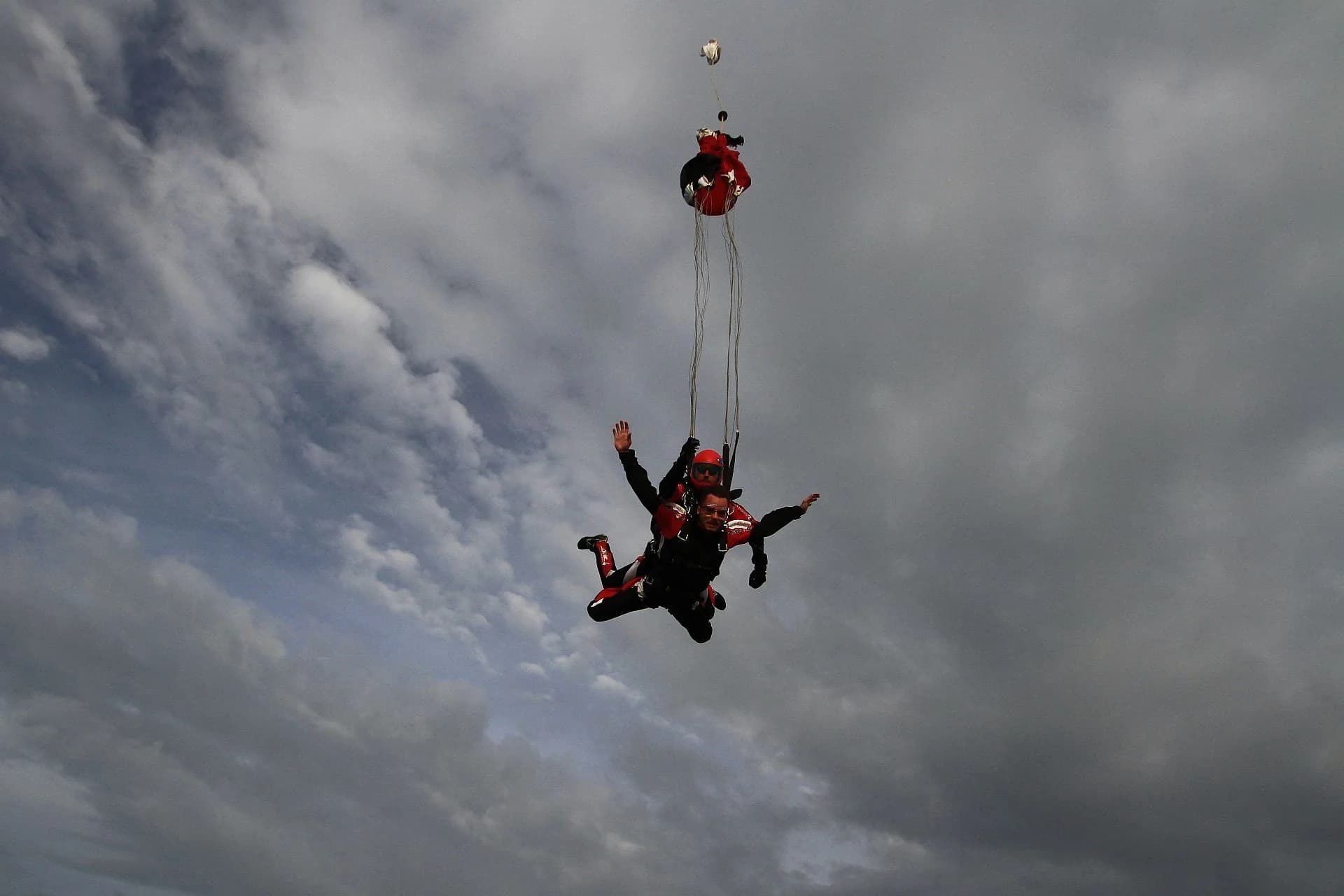
The opening
First the pull. Then silence — and a few calm minutes above Pomerania.
0102
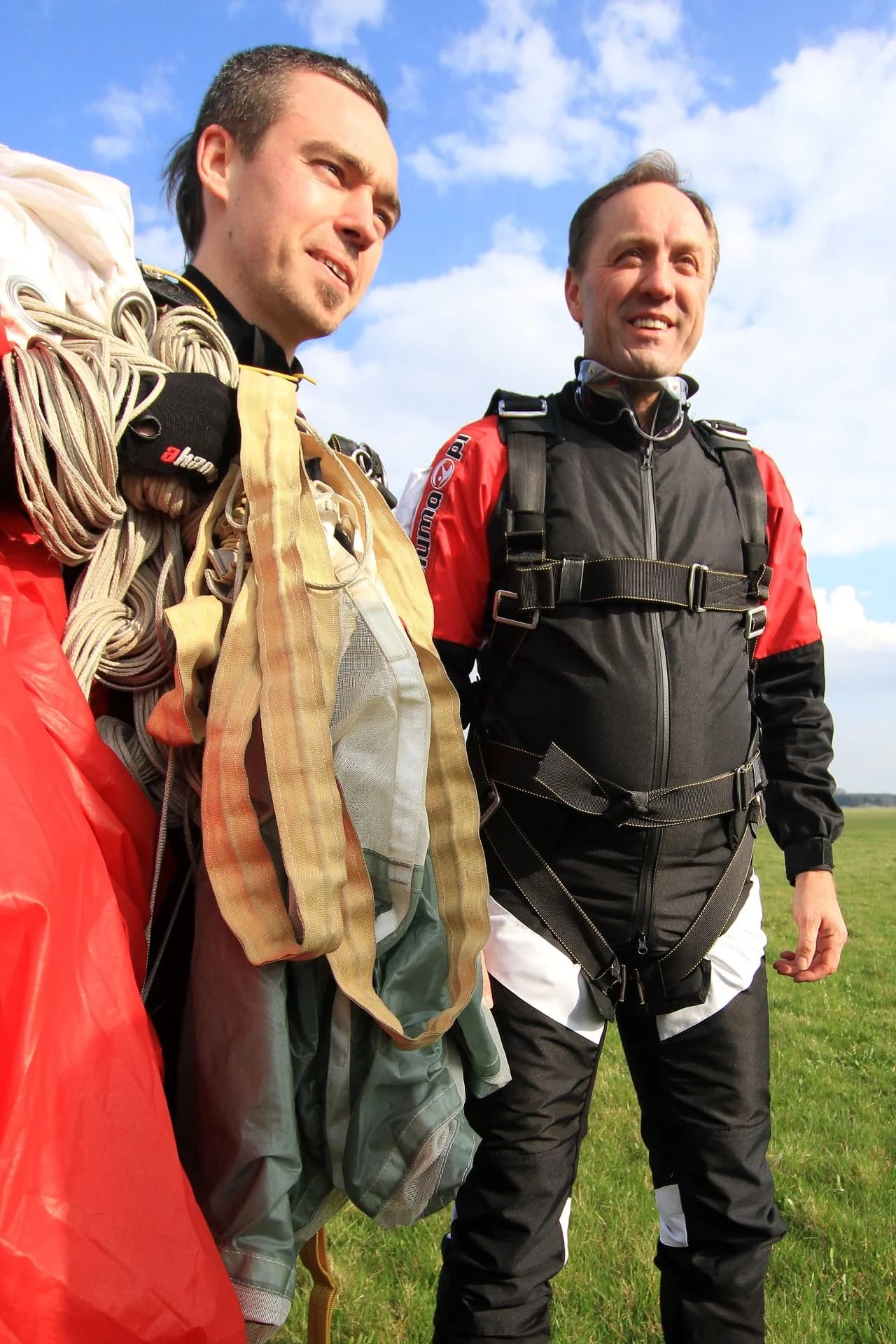
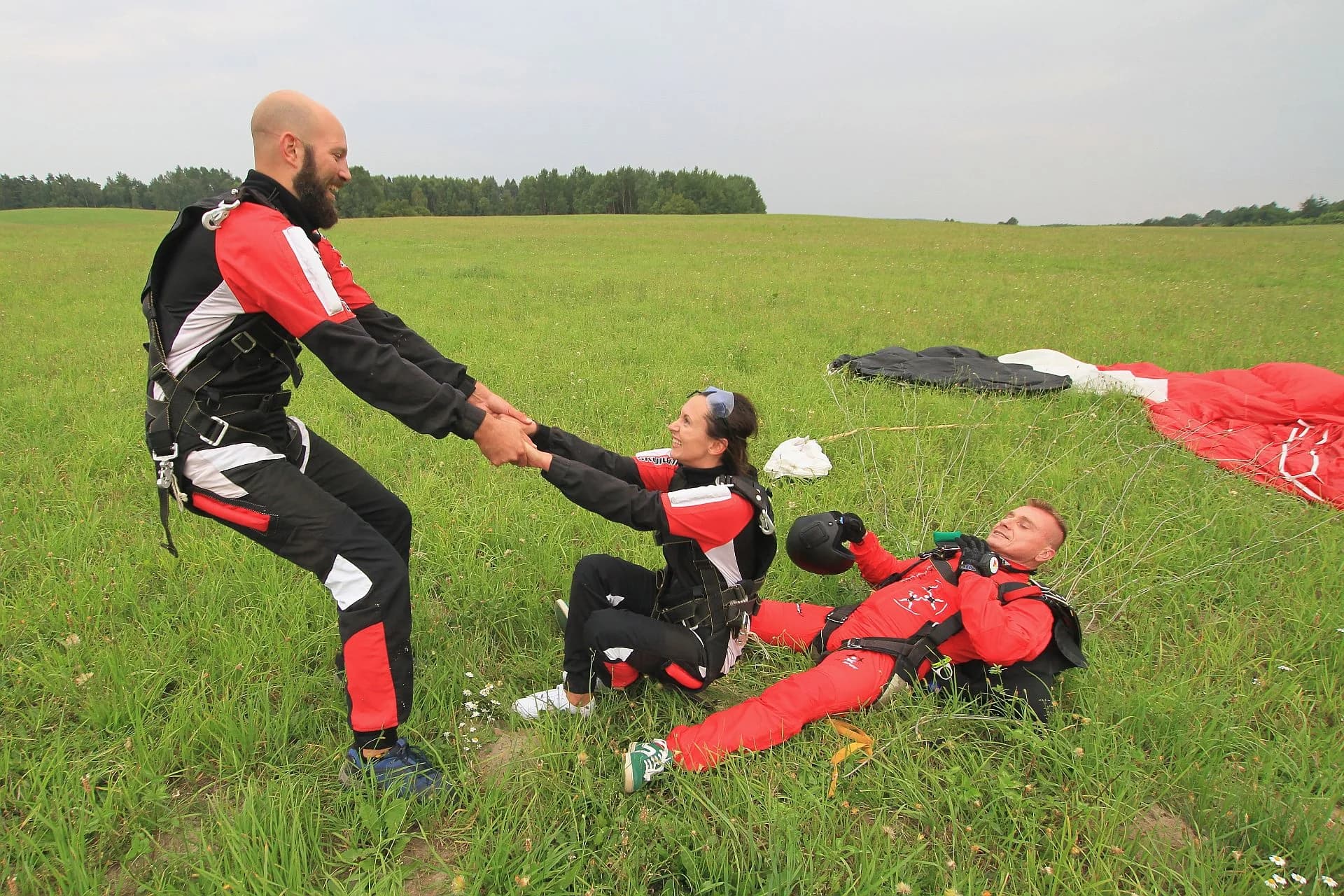
Back on the ground
The ground returns under your feet. Congratulations, relief, laughter — and one question: when can I go again?
0102
22 · Frame
Every frame
Hold the jump for a little longer. Open a photograph and take in every detail.
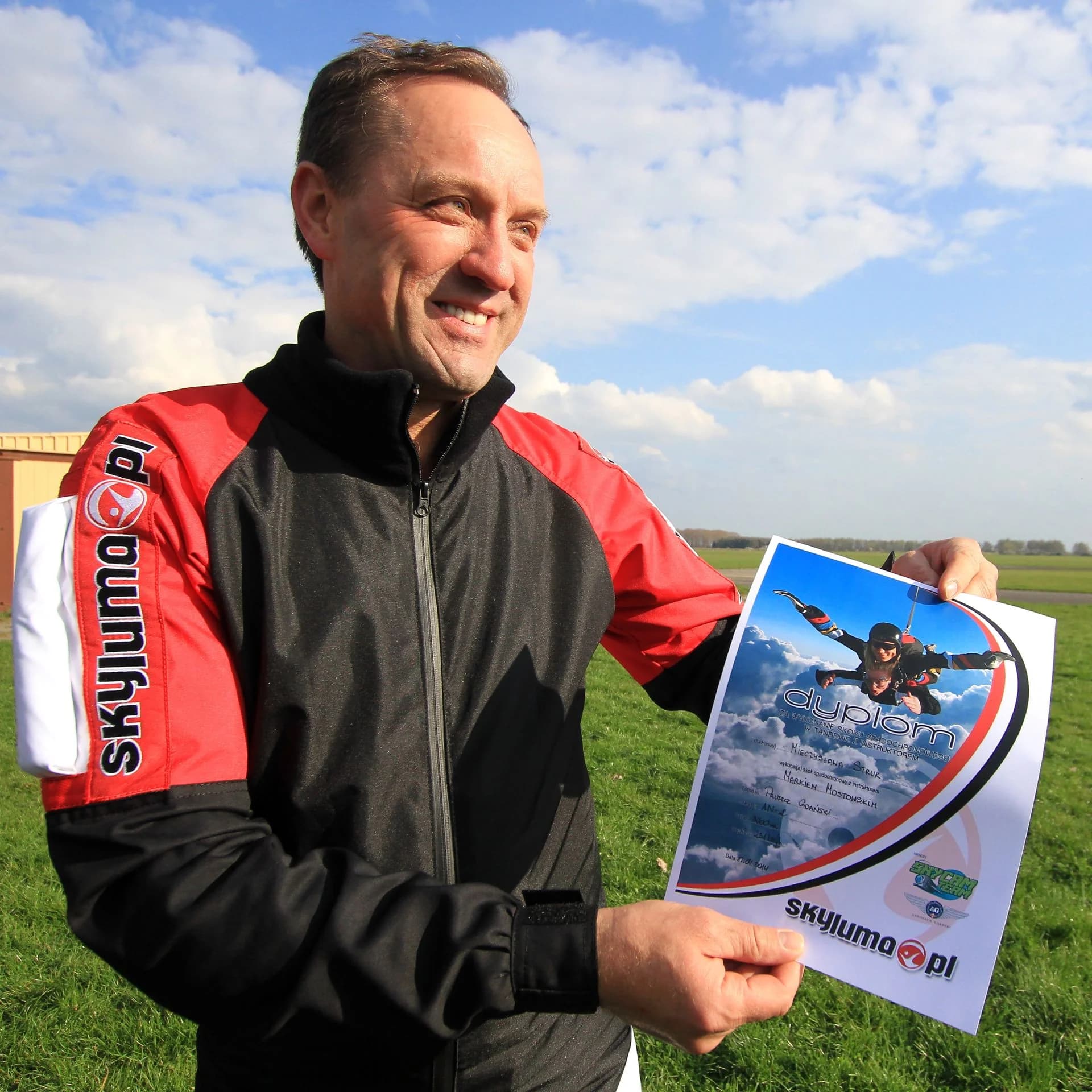
0 m · Back on the ground
The next frame could be yours.
What these photographs are
Our own jumps: our passengers, our instructors and our aircraft, not pictures bought from a stock library. They are arranged in the order of the day — the hangar and the briefing, the climb, the exit, freefall, the canopy ride, and what happens the moment after landing.
What a photograph cannot show
The noise and the speed of freefall, and the fact that for those 60 seconds the landscape is a backdrop rather than a view — the picture is wide and rushing, and the horizon tilts. Looking properly starts under the open canopy. That is set out in what you can see from 4,000 metres.
Where the air-to-air shots come from
From two places. The camera flyer, a separate skydiver, leaves the aircraft with you and films from the side, and a camera in the instructor's hand records the passenger's face up close. The passenger holds nothing, because on a tandem the hands stay free. A jump with the hand-cam is 1,350 zł, with a camera flyer 1,500 zł, and with both 1,700 zł; the full list is on the pricing page.
Where this is
We jump near Gdańsk, a few dozen kilometres inland, so the same landscape comes back in every frame shot from altitude: a patchwork of fields, the built-up strip along the shore, and water on the horizon. How much of it any given day leaves you is down to the air, which is the subject of skydiving on the Baltic coast.