Your first tandem jump — what to expect
The day in order, from arriving at the dropzone to the minutes after landing, and what your body does along the way.
On this page
A first tandem needs no physical preparation and nothing learned in advance. Everything you have to know, the instructor shows you on site in about fifteen minutes. What does help is knowing how the day runs, because the surprises are rarely the jump itself. They are the waiting, the cold in the open door, and how short that one minute turns out to be.
Arrival and paperwork
You get the exact address when your date is confirmed, because on a given day jumping may run from a different airfield. On arrival you show photo ID, give the code from your voucher and sign a declaration that you have no medical contraindications. Anyone under 18 brings written consent from a legal guardian.
The declaration is not a formality to tick through. If anything about your health gives you pause, check the requirements at home, not at the table with a pen in your hand. What to pack and what to wear has a guide of its own.
The briefing: two positions
The briefing takes about fifteen minutes and comes down to two body positions. You practise both on the ground before anyone boards the aircraft.
- The arch, for the exit: hips pushed forward, head back, knees bent and feet tucked back. In this shape the tandem settles belly to earth straight away.
- Your hands: usually on your harness at chest height until the instructor taps your shoulder. Then you can spread your arms.
- Your legs, for the landing: lifted out in front of you and held there until you have stopped.
If your instructor shows it slightly differently, their version is the one that counts.
Harness and goggles
Next you put on the passenger harness, with straps over the shoulders, across the chest and round the thighs. The instructor fits it to your build and tightens it. It is meant to be snug, because when the parachute opens it is the harness that takes your weight. You also get goggles, and a jumpsuit to go over your clothes if the conditions call for one.
Four clips join you to the instructor, two at the shoulders and two at the hips, but you board the aircraft still wearing the harness on its own.
Waiting for your lift
Then you wait, and the waiting can be harder than the jump. Lifts go in an order set by the weather and by how busy the dropzone is, so the time you arrive is not the time you take off. Friends can wait with you, watch the take-offs and landings, and pay nothing for it.
Some mornings the cloud sits too low and lifts by the afternoon. Some days never come together, and a new date is arranged; the call is made at the dropzone, not by the forecast on your phone. What stops jumping is covered in when we jump.
The climb to 4,000 metres
The aircraft is loud and the door is closed. The climb is calmer than you might expect, and a good time to look out: Pomerania shrinks below you, and on a clear day the coast sits off to one side. On the way up the instructor clips you to their harness and tightens the straps.
Pressure drops as you climb, and your ears may click on their own, as they do on an airliner. If they start to feel tight, swallowing or yawning usually clears them.
The door and the exit
At jump altitude the door opens. Noise and cold air come in together, because at 4,000 metres it is typically around 25 degrees colder than on the ground. You and the instructor shuffle to the edge. The instructor positions you both in the door and decides the moment you go. If you booked a camera flyer, they leave the aircraft with you.
This is usually where the fear peaks, and that is fine. There is no decision for you to make here: you are attached, and the instructor exits. What happens when a body locks up in the door is covered in the guide to fear of skydiving.
The first seconds and freefall
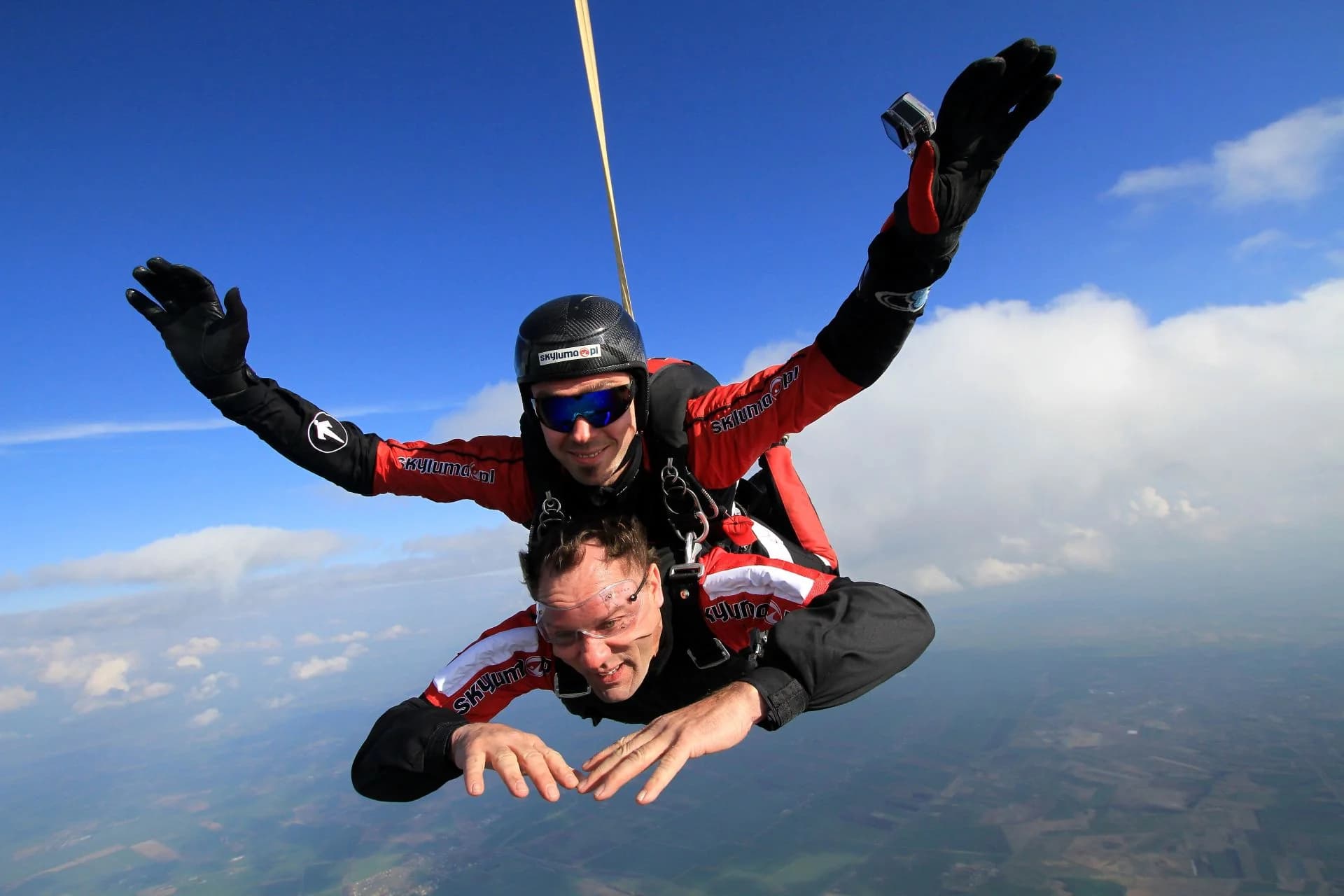
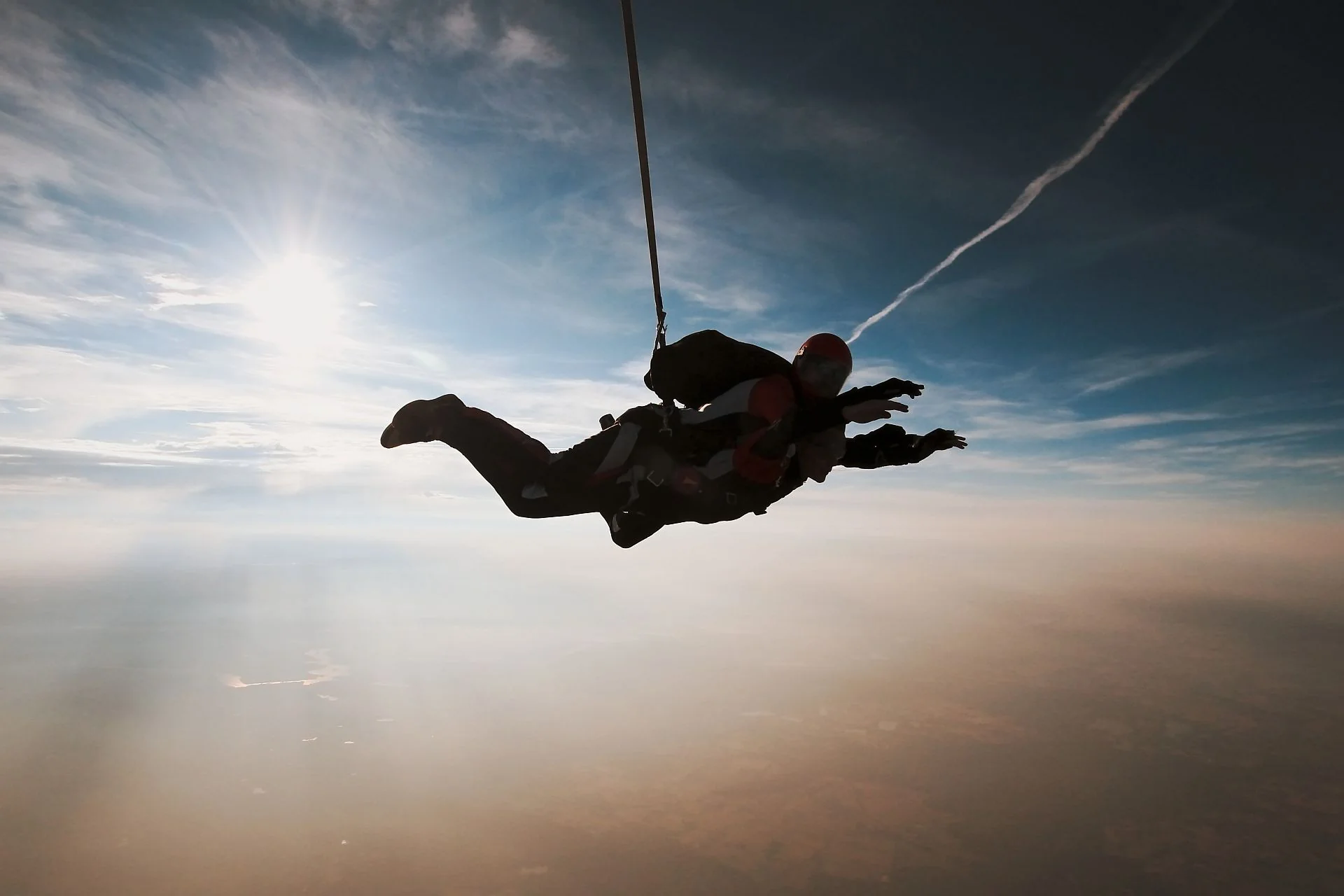
The first three seconds or so are the sharpest: noise, cold, no floor. If your stomach is going to react, it is now, and usually less than on a rollercoaster, because the aircraft is moving fast and the air starts carrying you the moment you leave. After ten to fifteen seconds air resistance matches your weight and the speed stops building. From then on nothing feels like falling; what remains is a strong, steady push of air from below.
Shortly after the exit the instructor throws out a small stabilising parachute called the drogue. Two people would fall much faster than one, and the drogue holds you at around 200 km/h and later pulls out the main canopy. That is usually when you feel the tap on your shoulder and can spread your arms. With a hand-cam, the instructor holds the camera right by your face throughout.
Breathing works normally. What can happen is that nerves make you hold your breath, and then the answer is to shout: a shout forces the air out, and the next breath follows by itself. Freefall lasts about a minute, down to the opening height, typically around 1,500 metres. That is longer than it sounds, and still too short.
The opening
At opening height the instructor releases the drogue, which pulls out the main canopy. The harness pulls you firmly upwards, your body swings from belly-down to upright, and within a few seconds the rush turns into quiet. For the first time since the door you can hear your own voice. What protects this moment is set out in is skydiving safe.
Several minutes under the canopy
For several minutes you fly slowly and quietly. You can talk, look around and, if the conditions allow, steer for a while yourself with the instructor watching. Only now does the landscape come together, because during freefall it was just a backdrop. That is set out in what you can see from 4,000 metres.
It gets warmer with every hundred metres, and the pressure rises all the way down. The whole difference between 4,000 metres and the ground is roughly what you feel four metres under water, at the bottom of a deep pool. If your ears block, swallow, yawn, or blow gently against a pinched nose.
Tight turns can unsettle a stomach. If you start to feel sick, say so straight away; gentler turns are usually enough.
Landing: legs up
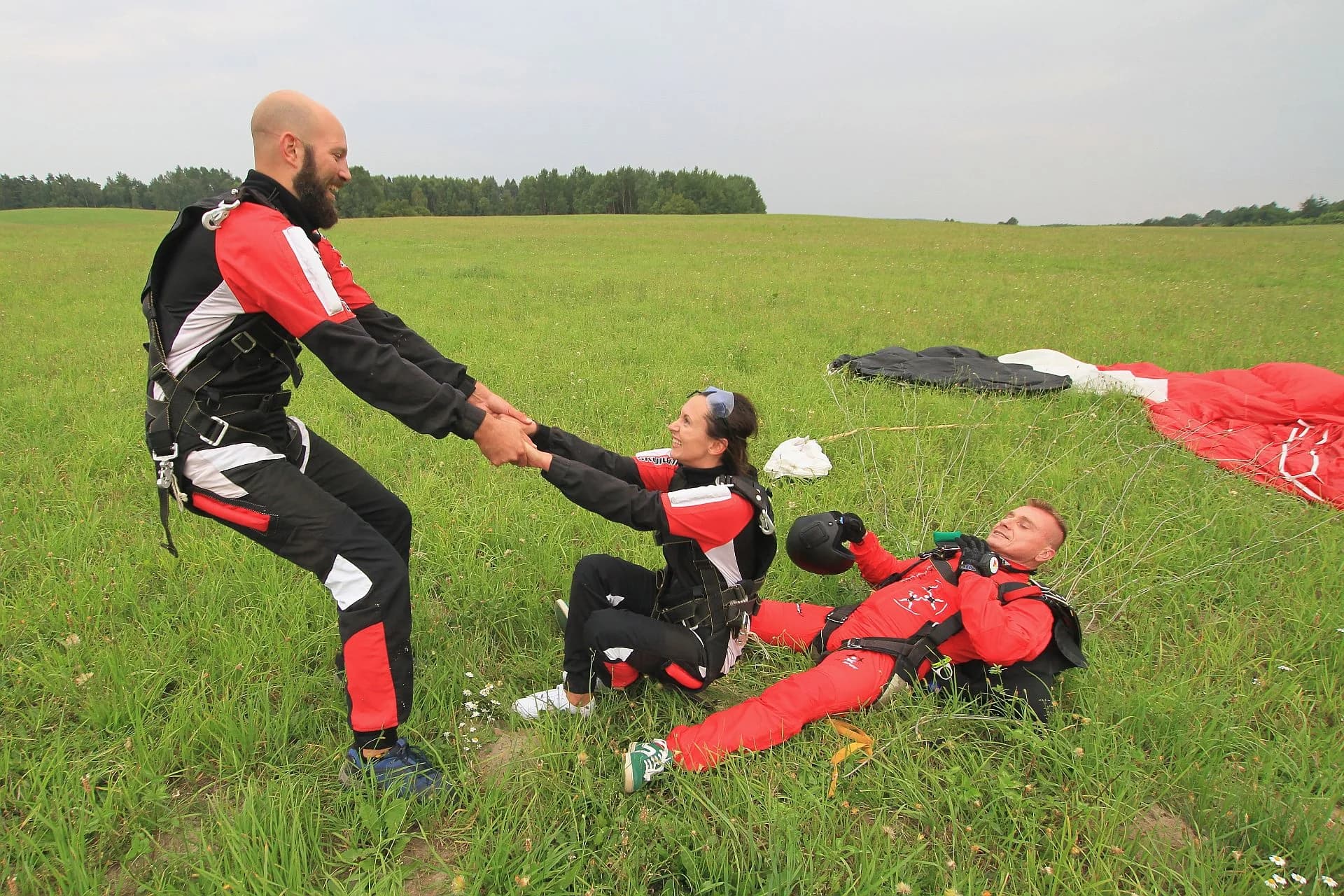
Before landing the instructor reminds you about your legs. Lift them out in front of you, high, and keep them there until you have stopped. The instructor lands on their own feet. Sometimes you finish standing and sometimes with a short slide on your bottom, and both are normal.
This is the one thing in the whole jump that genuinely depends on you. Feet dropped too early, because the ground looks close, take the impact themselves, so your legs stay up to the very end.
After landing
The instructor unclips you, and the harness and goggles come off. Your legs may shake for a while, and the adrenaline leaves people differently: some cannot stop talking, others sit down and say nothing. If your jump was filmed, you get the footage after landing.
Keep the rest of the day unhurried. Tiredness tends to arrive in the evening, bigger than a few minutes in the air would seem to justify.
Read next
Frequently asked questions
How do I prepare for my first skydive?
No physical preparation or training is needed. The arch at the exit and lifted legs at the landing are practised on site in about fifteen minutes. Bring photo ID, your voucher code, laced shoes and layered clothing, and allow several hours at the dropzone.
Is it cold in the aircraft and during the jump?
At 4,000 metres it is typically around 25 degrees colder than on the ground, so the open door and freefall are cold. That lasts about a minute, and under the canopy it gets warmer with every hundred metres. Layers are enough; a jumpsuit is provided if the conditions call for one.
Can I bring my phone or a camera?
No. Nothing is carried in your hands on a tandem, and nothing stays in a pocket in freefall. Filming is done by a camera flyer alongside you or by the instructor's hand-cam, if you choose a filmed option.
How long will I be at the dropzone?
Allow several hours and keep the rest of the day flexible. The jump itself, from exit to landing, is about a minute of freefall and several minutes under the canopy, but lifts go in an order set by the weather and how busy the day is.
How do I get over the fear of skydiving?
You do not have to beat it to jump. It peaks in the door and for about three seconds after the exit, then passes. In the door there is no decision to make: you are attached to the instructor, who decides the moment you go.
Will the pressure hurt my ears?
They may block, as on an airliner, especially on the way down. Swallowing, yawning or blowing gently against a pinched nose helps. If you have a cold or a sinus infection, ask a doctor whether it is a good day to jump.
Does freefall make your stomach drop?
Only in the first seconds, if at all, and usually less than on a rollercoaster, because the aircraft is moving fast and the air starts carrying you at once. After ten to fifteen seconds air resistance matches your weight, and all you feel is a strong push of air from below.