I am scared. Will I actually do it?
Being frightened before a skydive is normal and is not an obstacle. What helps is knowing when it arrives and what happens to it next.
On this page
Almost everybody is frightened. That is not a consoling sentence, it is a description of the facts: people who approach a first jump entirely calm are a minority, and usually have not quite worked out what is coming. Whether you can jump is decided by your weight, your health and, for anyone under 18, a guardian's consent. Fear is not on that list.
Fear of heights is usually a different thing
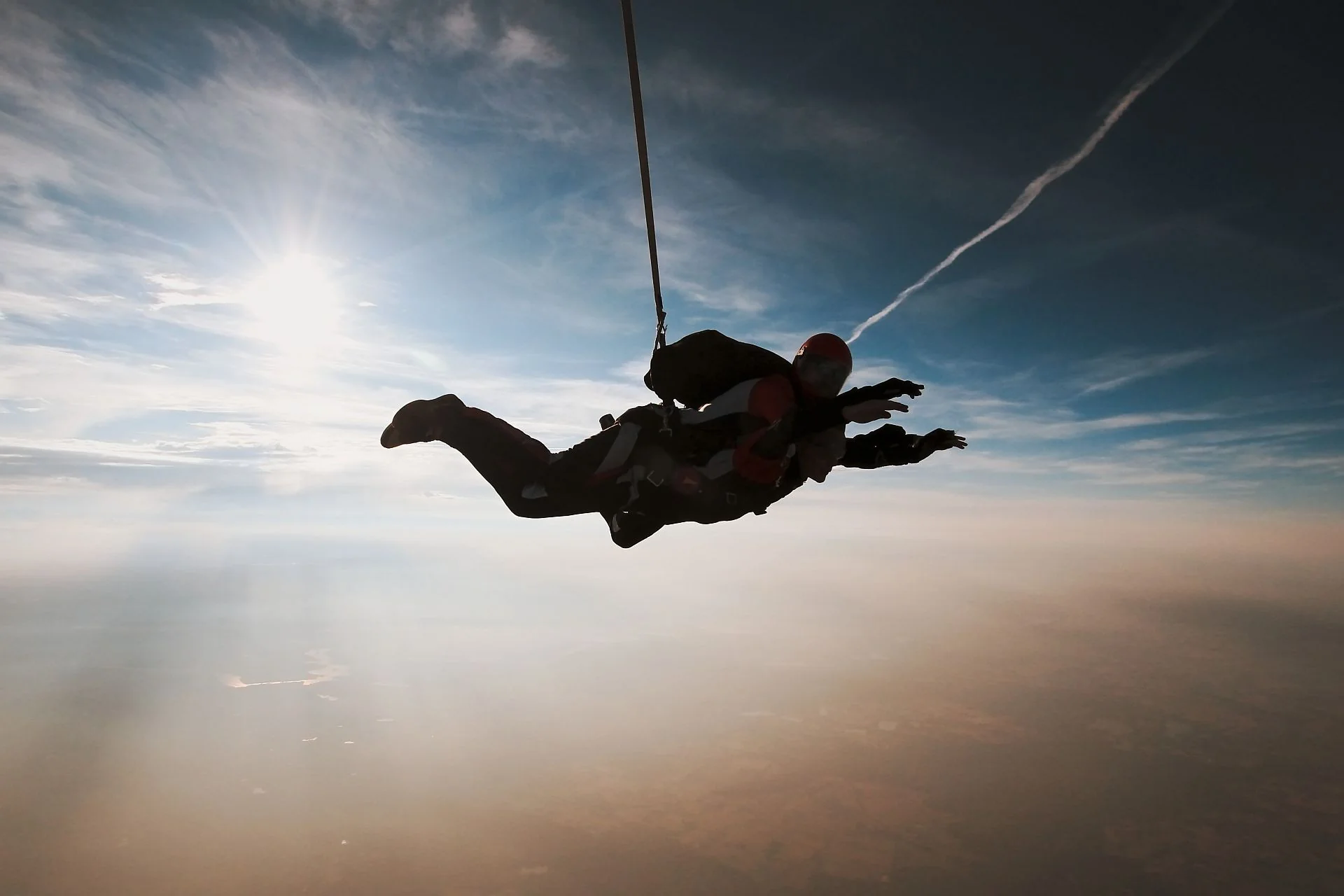
People with a fear of heights often assume a skydive is out of the question. In practice it is frequently the opposite. Fear of heights fires on a reference: the edge of a balcony, a ladder, a glass floor, something that shows your brain how far down the ground is. At 4,000 metres that reference is missing. The ground is a map, not a floor under your feet, and plenty of people with a fear of heights report not feeling it at all.
The edge appears exactly once in the whole jump: in the open door, for a few seconds. The climb happens with the door closed, and after the exit there is no edge left, only air all round you.
This is not a rule and it is not therapy. It is consistent enough, though, to be worth knowing before you rule the idea out.
Where it is actually hardest
- 01Before you arrive. The fear is largest here and lasts longest, because it has time: usually several days.
- 02During the briefing it drops, because there are now specific things to remember.
- 03In the aircraft, on the climb, it builds gradually, the higher you get.
- 04In the door it is sharpest. A few seconds, and this is the moment.
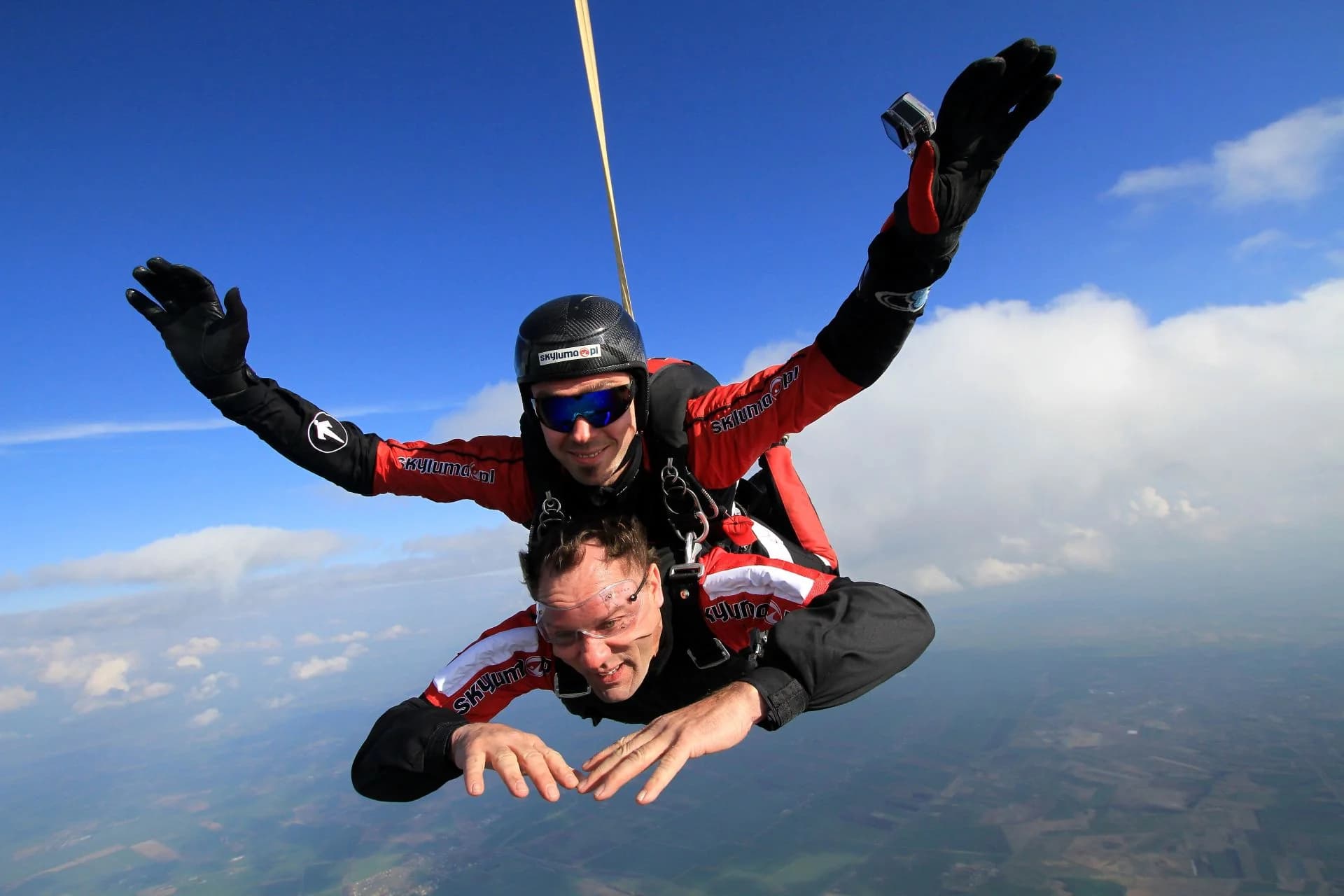
- 05After the exit it holds on for about three seconds, then it is gone. Not gradually but essentially at once, because there is nothing left to be frightened of: the decision has been made.
After a first jump you often hear roughly the same thing: the worst part was the week before, the door lasted five seconds, and then came a minute I am still telling people about.
What fear does to the body
Shaking hands, a dry mouth, quick breathing, a fifth trip to the toilet, talking too much or going completely silent. It is an ordinary response to adrenaline. Your heart speeds up, your breathing gets faster and shallower, your muscles tense, and digestion and saliva slow down, which is where the dry mouth and the knot in your stomach come from. Your body is getting ready to run from something you are not going to run from.
There is no need to hide it or to fight it. Instructors see it every day and it impresses nobody. Just say you are scared: to an instructor that is information, not a problem.
What helps, and what does not
- Knowing what will happen helps. The unknown is a bigger share of the fear than the altitude, which is why it is worth reading what a first jump is like, step by step.
- Jumping with somebody helps. A group distracts, and brings in a force that beats fear: not wanting to be the one who backs out.
- A short gap between picking the date and jumping helps. The longer you wait, the more time the fear has.
- A long exhale helps. Breathe in through your nose and out slowly through your mouth, several times in a row: fear speeds your breathing up, and a long exhale slows it down.
- Shouting helps. In the door and after the exit you can shout as much as you like. Screaming is free, and it makes you breathe.
- Alcohol does not help, and that is not an opinion but a condition of being cleared to jump.
- Calming pills taken on your own initiative do not help. They dull your reactions, and whether you can take them before a jump at all is for a doctor to decide.
- Watching malfunction videos does not help. Statistics do not reach the imagination, and the imagination is the opponent here.
If you freeze in the door
Sometimes a body locks up in the door: hands grab whatever is near, and the mind goes blank. A tandem is built for exactly that moment. You do not have to do anything to leave, because you are attached to the instructor, who positions you both in the door and decides the moment you go. The arch you practised on the ground makes the instructor's job easier, but getting the tandem stable after the exit is theirs.
Freezing is not refusing. A refusal is something you say, and it is best said early.
If you change your mind
Nobody is pushed. If you decide in the aircraft that you are not jumping, you ride back down with it and that is the end of it. It is rare, but it does happen, and nobody treats it as shameful.
If you know you might back out, tell the instructor on the ground, before boarding, rather than in the door. Then it can be talked through calmly before anyone gets on the aircraft.
The fear about the parachute
If what frightens you most is the parachute not opening, two facts are worth having. Every tandem rig carries two parachutes, a main and a reserve, plus an automatic activation device for the reserve. Decisions about the equipment are made by an instructor holding a tandem rating. The rest, without sales promises, is in is skydiving safe.
Buying for someone who is scared
A voucher is valid for 12 months, and the date is chosen by the person who jumps. Do not choose it for them. Let them pick the day when they are ready, and then not put it off, because waiting feeds the fear. If you can, go with them: people who come along pay nothing and can watch the take-offs and landings.
Do not push, and do not promise that it will not be frightening. A true sentence works better: it will be frightening for a few seconds. And if in the end they do not jump, the voucher is to the bearer and somebody else can use it.
After the jump
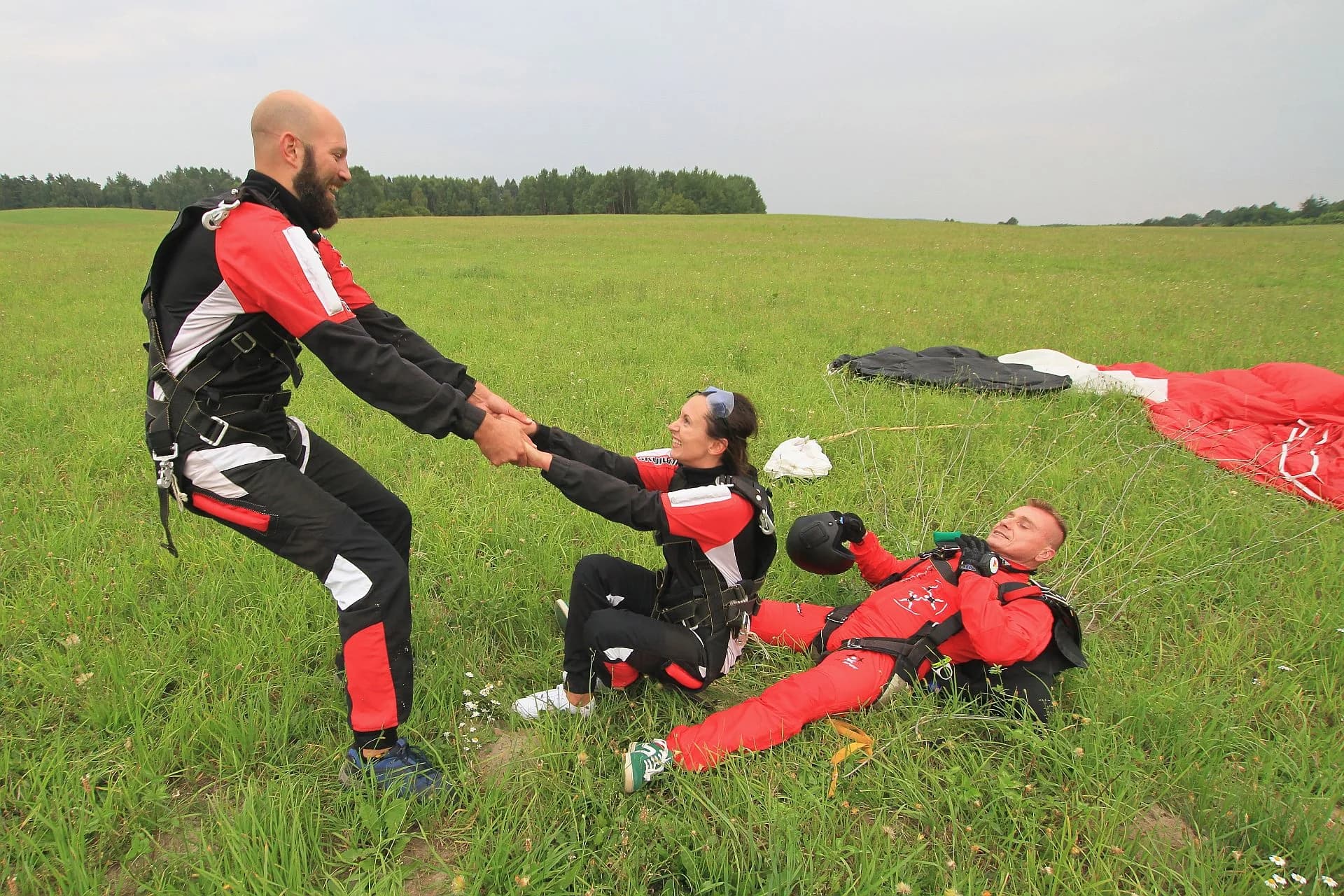
The fear from the door does not come back after the exit. What stays is the adrenaline, and it leaves people differently. Some cry or laugh for no reason after landing; others cannot finish a sentence for a quarter of an hour. Both are the same adrenaline, on its way down.
Some people ask about the next jump before the harness is off. If that is you, start with the comparison of tandem and AFF.
Read next
Frequently asked questions
I am afraid of heights. Can I jump?
Usually yes. Fear of heights fires on a reference to the ground: an edge, a ladder, a glass floor. At 4,000 metres that reference is missing and many people do not feel it at all.
Can I back out in the aircraft?
Yes, nobody is pushed. If you feel you might hesitate, tell the instructor on the ground, before boarding, rather than in the door.
When is the fear worst?
Before you arrive, and for a few seconds in the door. After the exit it holds on for about three seconds, then it is gone.
Can I jump if I have never flown before?
Yes. The flight up needs no experience of any kind. If you get travel sick, tell the instructor before boarding.
What happens if I freeze in the door?
You do not have to do anything. You are attached to the instructor, who positions you both in the door and decides the moment you go. Freezing is not refusing; if you really do not want to jump, say so clearly, ideally before boarding.
Can I take something to calm my nerves before the jump?
Not on your own initiative. Sedatives slow your reactions, and whether you can take them before a jump is for a doctor to decide. Anyone under the influence of alcohol or drugs will not be cleared to jump.
How can I help someone who is scared of skydiving?
Let them choose the date themselves, go to the dropzone with them, and do not push. A voucher is valid for 12 months and is to the bearer, so if they do not jump in the end, somebody else can use it.