What to bring and what to wear
A short list. Most of it is provided at the dropzone, and the things you need to bring fit in one sentence.
On this page
All you need of your own is photo ID, your voucher code, laced shoes and layered clothing. The harness, the rig and the goggles are at the dropzone, and you get a jumpsuit if the conditions call for one. Below, each of those comes with its reason, along with what stays out of the aircraft and why.
Documents
- Photo ID. We use it to check your age, and you need it for the paperwork before the jump.
- Your voucher code, on your phone or on paper. There is no need to print the voucher, and your phone stays on the ground afterwards anyway.
- Written consent from a legal guardian if the person jumping is under 18. Sort it out before you leave home, because without it the paperwork stops there.
On site you also sign a declaration that you have no medical contraindications. If anything gives you doubt, read the requirements at home rather than at the dropzone.
Clothing for 4,000 metres
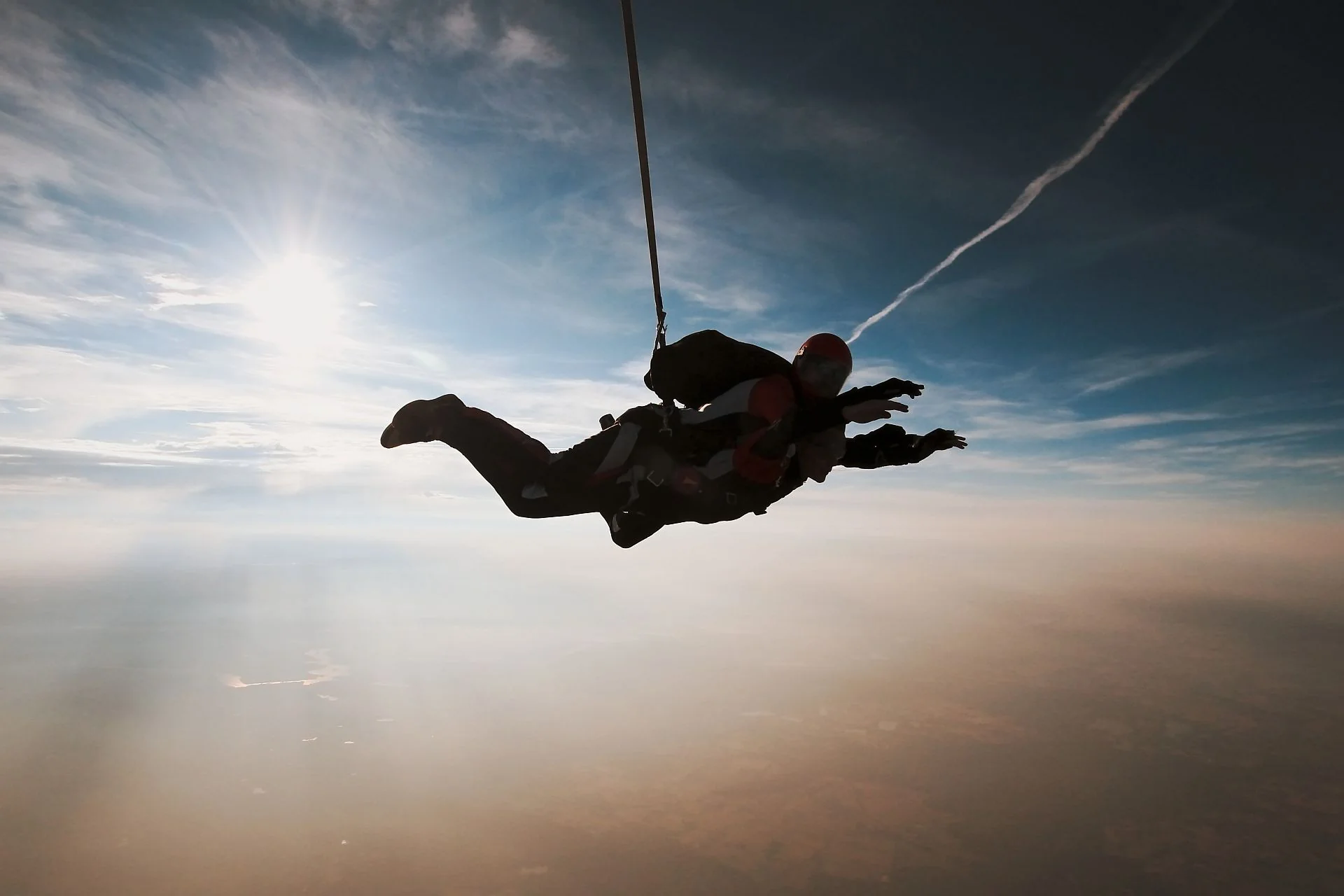
Air cools with height by about 6.5 °C per kilometre on average. At 4,000 metres that makes it typically around 25 degrees colder than on the ground: a 20-degree day below is a few degrees below freezing up there. Freefall adds wind at up to 200 km/h. A real day can differ from that arithmetic by several degrees either way.
It does not last long: a moment in the open door and about a minute of freefall, and under the canopy it gets warmer with every hundred metres. That is why layers work better than a winter coat. A thick coat gets in the way of a harness that has to sit snug, and it is too hot for waiting around in the sun. A t-shirt with a sweatshirt or a thin fleece is a good combination; in spring and autumn add one more layer.
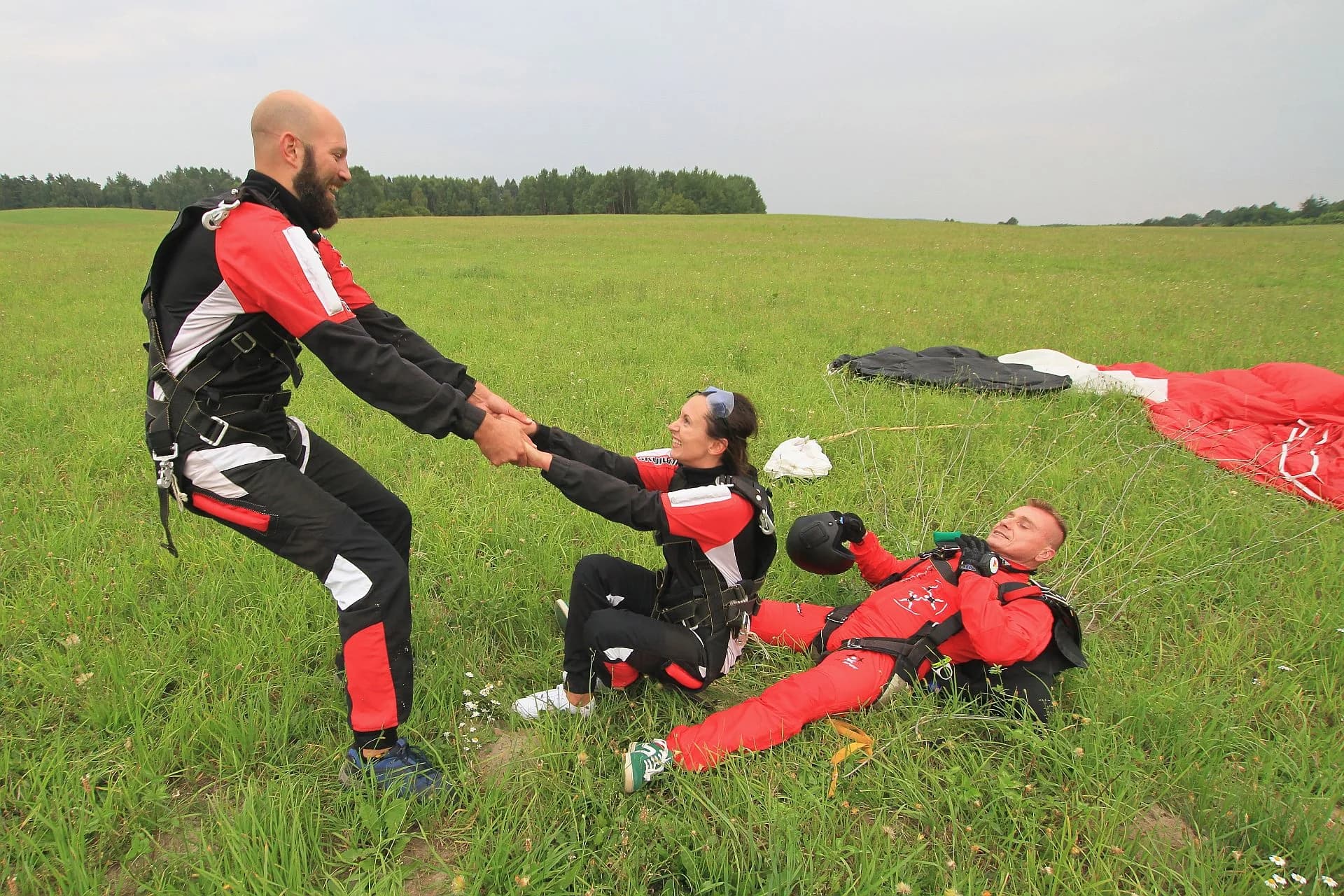
- Trousers: long and comfortable, and jeans are fine. The harness straps go round your thighs, and landings sometimes end in a slide on your bottom. Skirts and dresses do not work.
- Top: layers, with nothing loose enough to flap. A hoodie is fine as long as the hood has no long drawstrings.
Shoes
Ordinary trainers with flat soles, laced tight, are all you need. You lift your legs for the landing, but sometimes you finish standing, so your feet need to be stable. Freefall tugs at anything loose, and a shoe that comes off does not come back: it falls on whoever is below.
That rules out flip-flops, sandals, heels and slip-ons. It also rules out hiking boots with metal lace hooks, because a hook can catch on harness webbing or on the parachute's lines.
Hair, jewellery and pockets
- Tie long hair back with a band, ideally in a plait or low at the nape of the neck. Loose hair whips across faces in the airflow, yours and the instructor's, whose head is right behind yours. Clips and grips fall out easily.
- Leave jewellery at home: earrings, chains, bracelets, rings with a raised setting. They can catch on the harness or the goggles, and anything lost in the air is gone.
- Empty your pockets completely: phone, keys, wallet, coins, lighter. Nothing stays in a pocket in freefall, and whatever falls out lands on people and houses below.
- Scarves, snoods and hats stay on the ground. A scarf in that airflow becomes a rope looking for something to catch on, and no hat stays on at 200 km/h.
Phones and cameras
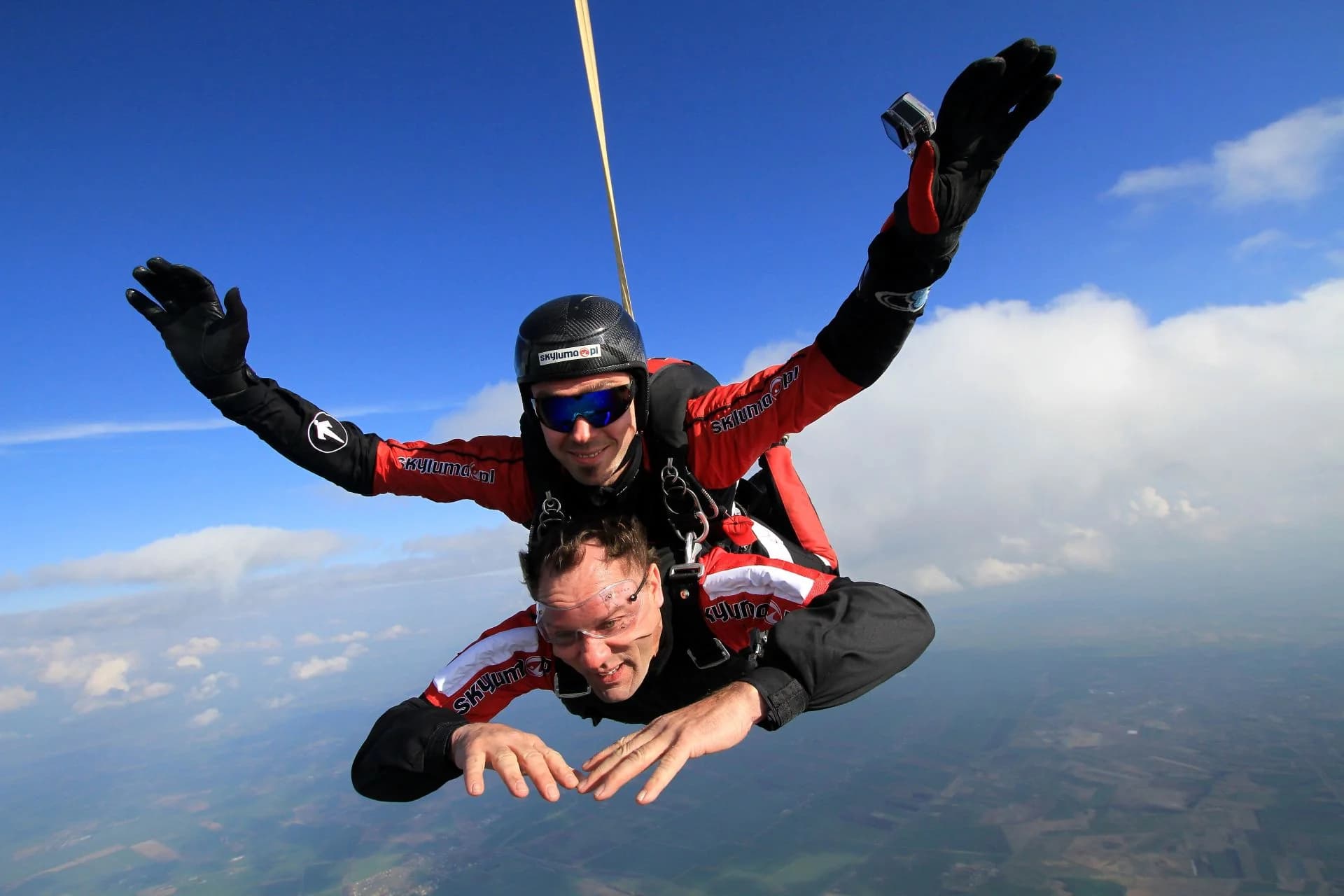
Nothing is carried in your hands on a tandem, so your own camera, action cam and selfie stick stay on the ground along with your phone. If you want footage, the jump is filmed by a camera flyer falling alongside you or by the instructor's hand-cam, held right by your face. You get the footage after landing.
Whatever does not go up with you stays in the car or with whoever came along. People who come with you can be at the dropzone all day and pay nothing.
Glasses and contact lenses
You can jump in glasses. Goggles go over them, holding them in place and keeping the airflow off your eyes. Mention your glasses at the briefing so the instructor picks suitable goggles.
Contact lenses are usually more comfortable and need nothing special, because the goggles shield your eyes from the wind. Tell the instructor about them just as you would about glasses. Bring the case, solution and a spare pair, or your glasses for the drive home; if a lens irritates your eye, you can change it without any hurry. Sunglasses stay on the ground, and in the aircraft the goggles take their place.
Food, drink and the wait
Eat a normal meal, as on any other day, but nothing heavy and not just before you arrive. On an empty stomach, adrenaline, the climb and the turns under the canopy can easily leave you feeling faint, and after a big lunch nausea comes more easily.
- Water and something small to eat. You will be at the dropzone for several hours, and the order of lifts rarely fits round mealtimes.
- Sunscreen and a cap for the waiting. An airfield is open ground, where sun and wind work on you for hours.
- A warm layer for later. After landing and towards evening it turns cool, especially in spring and autumn.
- A charged phone. It does not go up with you, but on the ground it is useful for photos before take-off and after landing.
The day before
- Sleep. Tiredness and adrenaline go together badly.
- Skip the alcohol, the evening before included. Anyone under the influence will not be cleared to jump.
- No scuba diving in the 24 hours before the jump. After a dive, nitrogen stays in your tissues for hours, and at 4,000 metres the air pressure is almost 40 per cent lower than on the ground.
- Check the forecast, but do not cancel on your own. The decision is made at the dropzone on the day and can differ from what the forecast suggested.
- Do not put the jump right before anything that cannot move: a flight, a wedding, an important trip. Weather can shift a jump to another day.
- Check the route. The address comes with your date confirmation, and that is the one that counts, because on a given day jumping may run from a different airfield.
Read next
Frequently asked questions
What should I wear?
Comfortable, layered sportswear, long trousers and flat laced trainers. No flip-flops, heels, scarves or jewellery. A jumpsuit, if the conditions call for one, is provided.
Can I bring my own camera?
No. Nothing is carried in your hands on a tandem, so your own camera, action cam and selfie stick stay on the ground. Footage comes from a camera flyer falling alongside you or from the instructor's hand-cam, on the filmed options.
Can I jump wearing glasses?
Yes, under goggles that go over your glasses and hold them in place. Mention it at the briefing so the instructor picks a suitable pair. Contact lenses are usually more comfortable.
Should I eat before jumping?
Yes, a normal meal, as long as it is not heavy and not just before you arrive. On an empty stomach it is easy to feel faint in the aircraft, and after a heavy meal nausea comes more easily.
Can I skydive with contact lenses?
Yes. The goggles keep the airflow off your eyes, and all you need to do is tell the instructor about the lenses, as you would about glasses. Bring the case and a spare pair, or glasses for the drive home.
What do I do with my phone and keys?
Leave them on the ground, in the car or with whoever came with you. Nothing stays in a pocket in freefall, and anything that falls out falls on people below.
Do I need a printed voucher?
No. The code from your voucher is enough, on your phone or written on a piece of paper.