‘Angry August’: late-season burnout and what a drop zone team can do before it arrives
Angie Aragon, a USPA examiner and national director, describes the August when heat and months of work wear down instructors, packers, manifest staff, pilots and managers. She proposes planned breaks, task rotation, team check-ins and a short huddle at the end of the day.
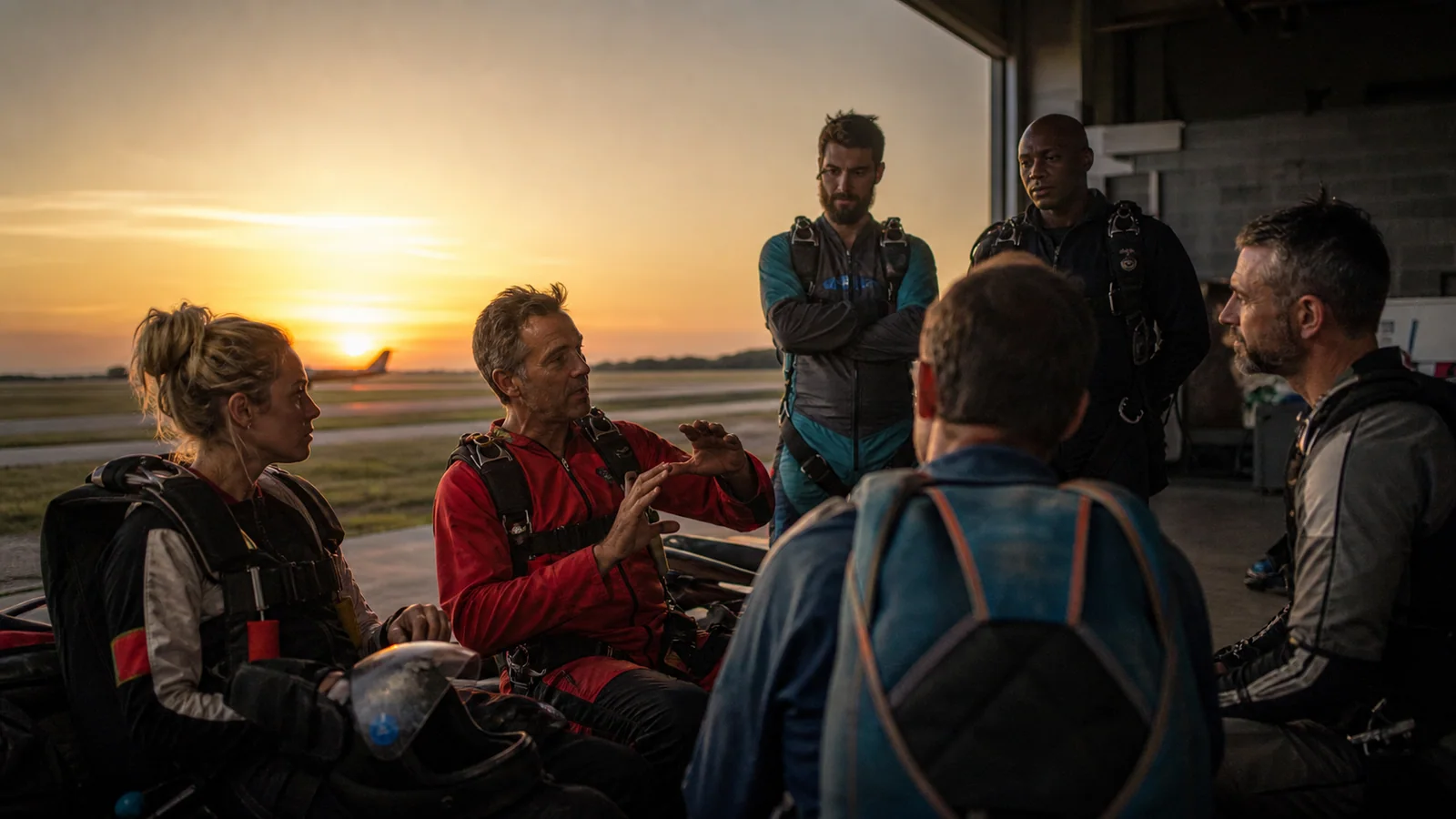 Photo
PhotoIn brief
- On 2 July 2026 USPA published Angie Aragon's piece on the burnout that builds up at drop zones towards the end of summer.
- The author cites sports psychology: fatigue affects performance, reaction time, decisions and communication, and with them safety.
- She proposes breaks, hydration, rotating days off and tasks, shorter shifts, peer support and a five-minute huddle at the end of the day.
Angie Aragon opens with scenes anyone who has spent a summer at a drop zone will know. Someone nearly loses it over a misplaced altimeter. Talking to manifest, the desk that puts jumpers on each load, feels like two people speaking different languages. By the end of the season the whole drop zone can feel overheated and overworked, held together, as she puts it, by caffeine, ibuprofen and KT tape.
Aragon is a USPA examiner who evaluates candidates for AFF, tandem and coach ratings, and a national director on USPA's board. AFF (Accelerated Freefall) is a training programme leading to solo jumping. The piece appeared in early July with a clear aim: to get teams ready before August arrives.
What ‘Angry August’ means
The author uses the term for the point when the summer rush peaks, the heat does not let up and exhaustion accumulates. Instructors, packers, manifest staff, pilots and managers all feel it. By then many have worked for months on little rest while still keeping up the professionalism, awareness and safety standards the sport demands. As Aragon writes, tempers flare as quickly as the temperature rises.
Signs worth noticing
The article has no checklist, but it describes recognisable symptoms:
- irritation over trivia, such as a misplaced altimeter
- communication between the team and manifest getting harder
- an atmosphere in which any small inconvenience can set off open conflict
- months of work on little rest
- fading enjoyment of what drew people into the sport
Aragon cites sports psychology, which she says consistently shows that fatigue directly affects performance, reaction time, decision-making, communication and overall safety. Exhausted people make mistakes more easily, and small frustrations grow into larger conflicts.
Recovery as part of the job
The first step, in the author's view, is to accept that recovery is not a luxury but part of performance. A drop zone takes gear checks and emergency procedures seriously and should plan physical and mental recovery the same way. Structured breaks matter, and so does hydration. Even a 10-minute cool-down in the middle of a demanding day can help restore focus and reduce stress.
What to arrange before August
Most of the proposals are organisational decisions rather than a question of one person's willpower. The author lists:
- rotating days off and shorter shifts where the drop zone can offer them
- task rotation, because changing duties for part of the day helps people recharge
- regular check-ins by team leaders on how people are holding up, before tension turns into conflict
- peer support in which taking tasks off an overloaded colleague is normal
- treating a request for help as responsible rather than weak
- a five-minute huddle at the end of the day to acknowledge the work, share a laugh and set the tone for tomorrow
The author stresses that small adjustments to workload made early protect morale later. She ends by proposing that August stop being a month of frustration and become one of resilience, teamwork and professionalism under pressure.
This is a signed article on USPA's website, not a rule or a formal recommendation. It changes no requirements for drop zones in the United States or in Poland.