Red cutaway, silver reserve: a USPA director wants one standard for every student rig
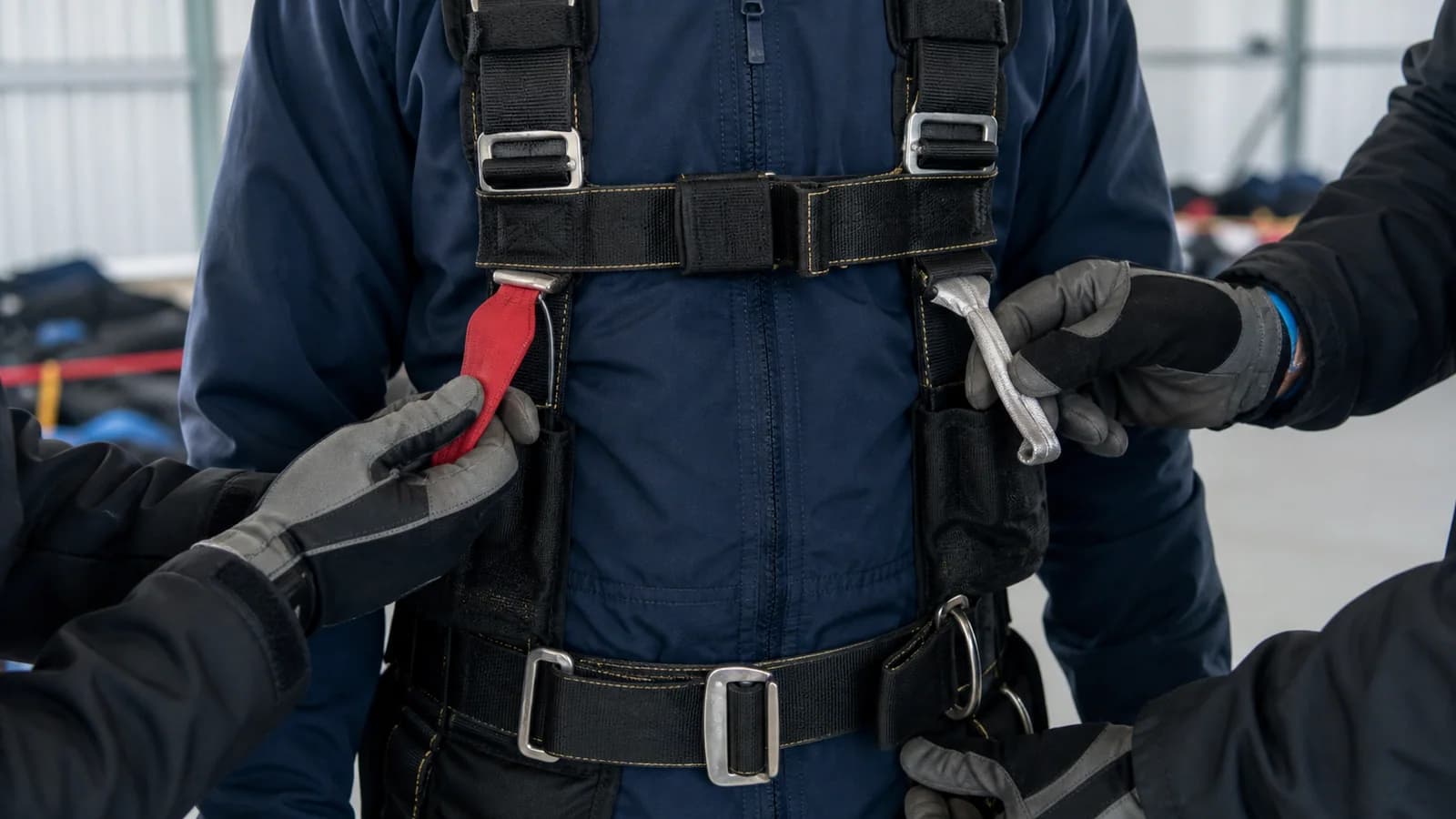
Ron Bell, USPA's Director of Safety and Training, wants a convention followed at many drop zones to become a requirement for every student rig. It is an argument, not a new rule: USPA's Basic Safety Requirements do not currently specify handle colours.
 Photo
PhotoIn brief
- Ron Bell proposes that every student rig carry a red cutaway handle and a silver metal D-ring reserve handle.
- Today it is a convention, not a requirement: USPA rules do not specify handle colours.
- The piece concerns US drop zones and says nothing about Polish rules or training programmes.
Ron Bell is Director of Safety and Training at USPA, the United States Parachute Association. On 23 July 2026 he used the Rating Corner column to write about one detail of student equipment: the colour of the handles. At many drop zones the cutaway handle is red and the reserve handle is a silver metal D-ring. Bell points out that this is still only a convention. It is not universal, nobody requires it and nobody enforces it.
Two handles, two jobs
The cutaway handle releases the main canopy from the harness. The reserve handle opens the container holding the reserve parachute. A student wears both on the front of the harness and rehearses them many times on the ground before boarding an aircraft for the first time. In an emergency the right handle has to be recognised almost without thinking, and that reflex is what the whole argument is about.
Where hesitation comes from
Bell describes the moments when a student meets different equipment: moving to another rig, travelling to another drop zone or downsizing as they progress. If the muscle memory was built on a red cutaway handle and the new rig has a different colour, the difference looks trivial on the ground. Under the stress of a malfunction that demands immediate action, Bell writes, it introduces hesitation. In emergency procedures, hesitation costs time.
Ground training usually happens standing up, with the student looking down at the handles the same way every time. In the air the student may be on their back, spinning or tumbling. Under a malfunctioning canopy, harness tension can shift the handles away from where the student saw them on the ground, and in freefall a jumpsuit can ride up and partly cover them. Red and silver stand out against almost any jumpsuit. A handle that matches the student's clothing takes longer to find.
Bell also points to memory. Without regular repetition, he writes, retention of procedures can fade noticeably within as little as 30 days, while colour recognition does not fade the same way. With one standard, every jump reinforces the same association. With mixed colours, the same routine works against the student.
A command over the radio
The simplest argument is about communication. When a student in a developing emergency is not responding correctly, a ground instructor may need to give instructions by radio. With a shared standard, naming the colour is enough. Without it, the instructor has to remember which handles the rig in the air happens to have, or hope the student identifies them correctly under pressure. Bell considers neither acceptable when seconds count.
The same applies when another jumper in freefall has to reach the reserve handle of someone who is not responding, or when an AFF (Accelerated Freefall) instructor flying alongside the student intervenes, sometimes in an unstable position with little altitude to spare.
What USPA requires today
USPA's Basic Safety Requirements list the equipment a student must use until earning an A licence, including a rigid helmet, an automatic activation device (AAD), a visually accessible altimeter and canopies suited to the student. Handle colour is not on the list. The same rules do require additional ground instruction in emergency procedures and deployment before a student jumps any unfamiliar system, and a complete gear check by an instructor before boarding.
Bell writes that the gap between most rigs and all rigs is exactly where accidents can happen. Standardisation, in his view, needs no new technology and no meaningful expense, only for drop zone operators, instructors and gear dealers to treat it as a firm requirement.
Licensed jumpers are not covered by the proposal. They know their own equipment and have shown proficiency in emergency procedures, so a silver soft reserve handle remains a reasonable option for them. Bell still considers a clear visual difference between the two handles good practice.
The US debate changes nothing about training in Poland. The practical point for a student is simpler: if the rig changes during a course, ask your own instructor about differences in handles and procedure before you board.