USPA outlines training changes for 2027: instructor continuity and more canopy development
The summer board meeting produced decisions with different status, from a ground-only instructional rating to C- and D-licence canopy training cards for the 2027 SIM. Some already have an effective date; the rest await their wording in the manuals.
 Photo
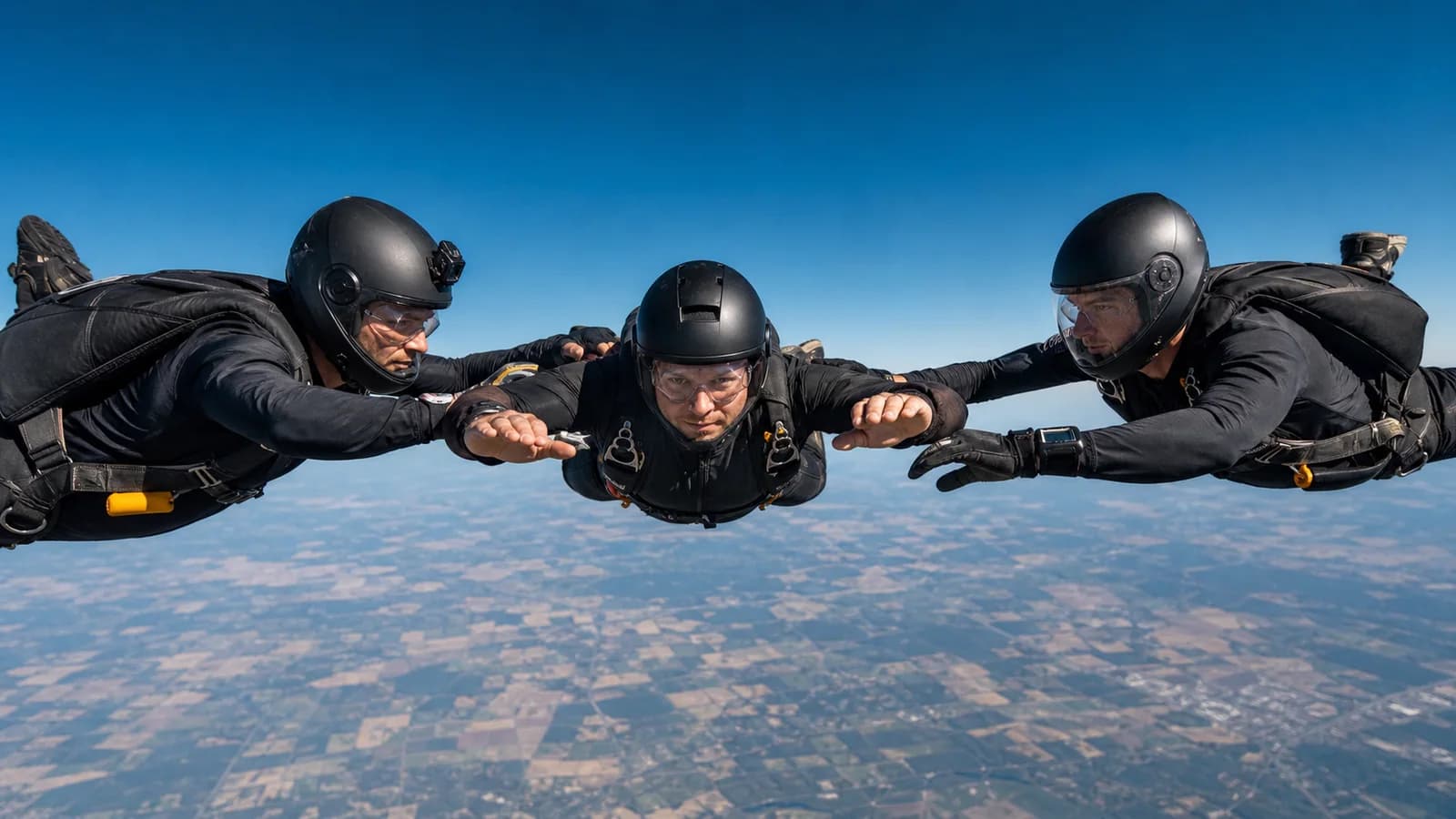
PhotoThe board of directors of USPA, the United States Parachute Association, has closed its summer meeting in Fredericksburg, Virginia. The summary published on 16 August 2026 lists decisions that go beyond routine document maintenance. They cover three areas: retaining instructional experience, canopy training and formally describing newer kinds of flight.
A ground-only path for experienced instructors
USPA approved a new instructional rating limited to ground work. It is meant to let experienced instructors in AFF (Accelerated Freefall) and in the IAD and static-line methods, in which an instructor or a static line deploys the student's parachute on the first jumps, keep carrying out the ground responsibilities of their rating when they are unable or unwilling to meet the in-air requirements. The distinction preserves experience without weakening the standard for instructors who fly with students.
The idea was already under discussion in February. The minutes of the winter meeting describe two groups: rated instructors who can no longer meet the in-air requirements, and newer candidates entering the instructional pathway. The stated goal was inclusion in the 2027 Instructional Rating Manual (IRM). The summer summary describes only the first group.
Canopy development beyond the first licence
USPA also approved canopy training and proficiency cards for the C and D licences, to be added to the 2027 Skydiver's Information Manual (SIM). The direction is clear: canopy competence is framed as continuing development rather than something finished at A-licence level.
The background was set out in February. USPA's canopy task force presented incident statistics to the board: many serious injuries happen on landing, and holders of higher licences are increasingly injured while attempting advanced canopy manoeuvres. Among other things, the task force proposed bringing back the parachute landing fall (PLF) as a foundational skill and a combined C/D canopy progression based on measurable skills rather than jump numbers.
- XRW recommendations get their own section in Chapter 5 of the 2027 SIM; XRW means a wingsuit pilot flying close to, or docking with, a canopy pilot on a fast, highly loaded parachute
- the board approved the content of a tandem prohibited-jump list, which takes effect on 1 January 2027
- a new Basic Safety Requirement (BSR) prohibits wingsuit tandems unless the tandem-system manufacturer approves them, and a task force is to assess whether they could be permitted in future
- demonstration jumps require an FAA Form 7711-1 filed with both USPA and the FAA, except at a skydiving facility with an FAA-approved landing area
- the board added trial virtual meetings in autumn 2026 and spring 2027, open to members
One announcement, several implementation stages
The decisions do not share one status. The tandem prohibited-jump list has approved content and a date: 1 January 2027. The wingsuit tandem ban has been added to the BSRs, although the summary gives no effective date. The canopy cards and the XRW section are content intended for the 2027 SIM, and the summary gives no date for the ground-only rating. Reading the package as one immediately effective rule would therefore be inaccurate.
AFF: separating retained knowledge from in-air currency
A ground-only rating addresses a real school problem: an instructor may retain deep briefing, procedure and debriefing expertise after no longer remaining current or willing to work with a student in freefall. The new route can retain that knowledge while drawing a visible boundary around in-air responsibility. Its value will depend on how the final material defines supervision, renewal and scope.
Canopy training: competence that is easy to treat as finished
C- and D-licence cards suggest an attempt to structure a stage often served by courses, coaching and local convention. Holding a later licence alone does not describe approach planning, traffic assessment, canopy choice or responses to changing conditions. A good card can create measurable development points; a poor one becomes another form. The exercises and completion criteria written into the 2027 SIM will decide which it is.
What the summary does not say
The 16 August announcement lists the board's decisions but not their full wording. It contains no exercises from the canopy cards, no scope for the ground-only rating and not the prohibited-jump list itself. USPA said in it that full minutes would follow and that a detailed article would appear in the October issue of Parachutist. Until the 2027 SIM and IRM are published, these decisions set a direction rather than a procedure to apply.
The board's next meetings are scheduled for 12 November 2026 (virtual) and 5–7 February 2027 in Cincinnati.