Carbon monoxide in jump aircraft: the hazard nobody can smell
USPA is urging that every piston jump plane carry a carbon monoxide detector as standard. FAA and the European agency EASA explain how the gas gets into the cabin, and EASA recommends detectors in a bulletin it describes as non-mandatory.
 Photo
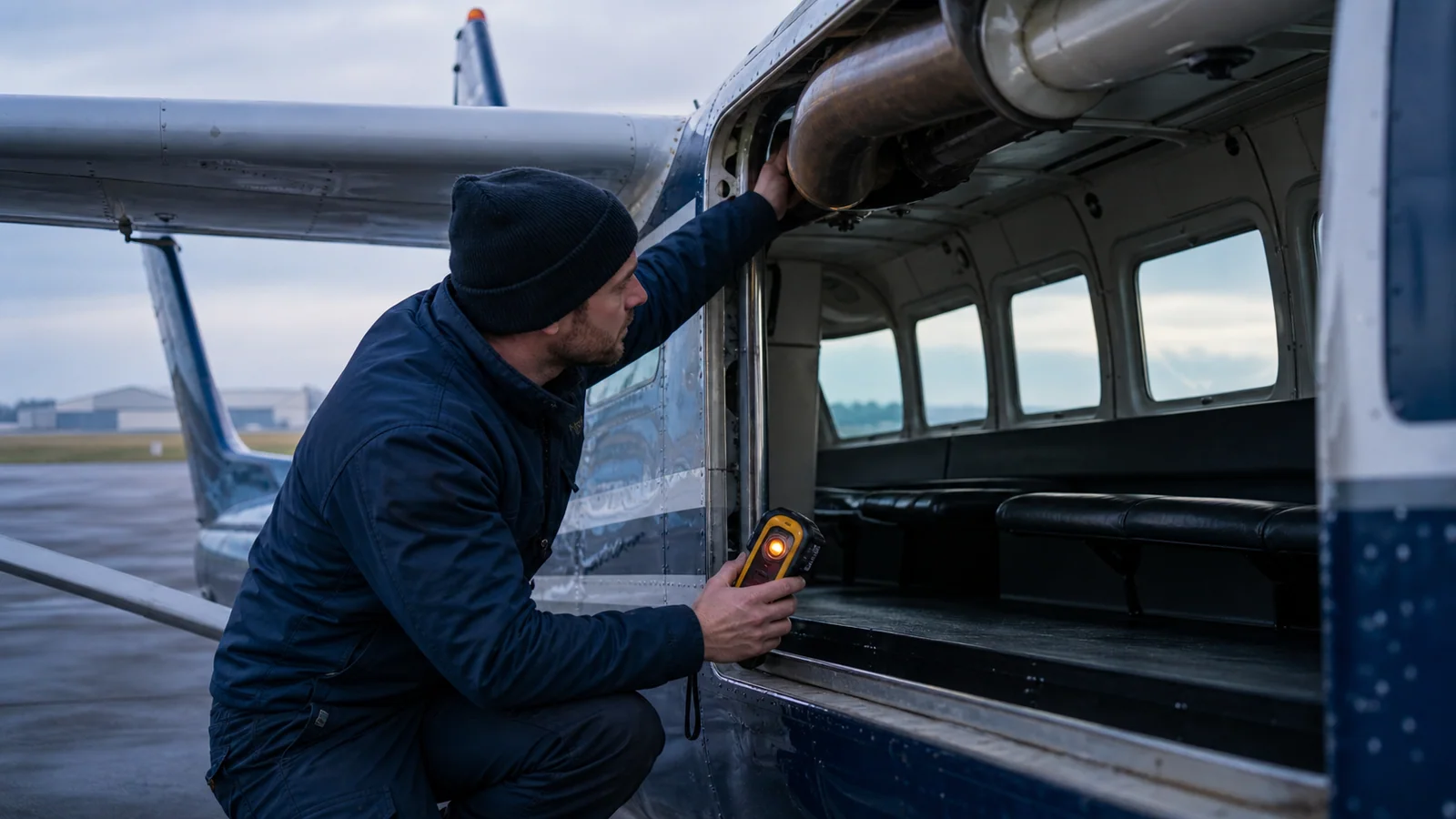
PhotoCarbon monoxide (CO) has no colour, smell or taste. It comes from incomplete combustion in the engine, and in a piston aircraft it can reach the cabin through a damaged exhaust or heating system, especially while the heating is on. Michael Knight, USPA's director of government relations, lists the usual paths: a cracked muffler, a faulty exhaust stack slip joint and a hole in the firewall.
His piece appeared on 29 January 2026 in the Rating Corner column. It opens by noting that piston Cessnas are the most common aircraft type in skydiving operations worldwide, and it closes with a call to make a CO detector mandatory equipment on every piston jump plane.
An appeal, not a rule
That is the author's position in a column, not a new USPA requirement, and still less Polish law: an American membership organisation does not regulate aviation in Europe. The European Union Aviation Safety Agency (EASA) addressed the same risk in Safety Information Bulletin 2020-01R1 of 19 October 2021. It recommends CO detectors in aircraft with internal combustion engines or combustion heaters, and states on every page that its recommendations are not mandatory.
The bulletin cites findings by the UK Air Accidents Investigation Branch after a fatal accident involving a Piper PA-46 Malibu, in which toxicology tests found a potentially fatal level of carbon monoxide in the passenger. EASA adds that piston engines produce the highest concentrations but turbine exhausts also contain CO, and that the risk rises in winter, when the heating is in use.
Hypoxia in disguise
CO binds to haemoglobin far more readily than oxygen; FAA puts its affinity at about 240 times that of oxygen. The result is carboxyhaemoglobin, blood that carries less oxygen and tissues that start to go short of it. The mechanism differs from altitude hypoxia, but the effects can be very similar.
A table in the FAA brochure links symptoms to the percentage of carboxyhaemoglobin in the blood. At 10–20 per cent a slight headache is typical; at 31–40 per cent impaired judgement, shortness of breath and blurred vision follow; above 50 per cent comes unconsciousness, and death if the exposure continues. FAA notes that symptoms can be worse and appear sooner at altitude, and that smokers can start from a raised baseline.
USPA points to conditions typical of skydiving: altitude, adrenaline and stress produce reactions of their own that can mask the early signs. Headache, dizziness, fatigue, nausea or confusion are then easy to put down to nerves or altitude. Poorer concentration just before a jump can in turn affect gear checks, body position in freefall and emergency response.
Maintenance first, then the detector
All three documents put prevention first: heating, ventilation and exhaust systems kept in working order to the manufacturer's standards. USPA calls regular maintenance the primary method of prevention. FAA asks for particular attention to older aircraft because of corrosion and wear, while EASA adds aircraft that fly little and recommends a CO concentration check on the exhaust heat exchanger as part of inspections.
The detector is a second line of defence; USPA calls it an additional layer of protection against exhaust failure. The cheapest options are stick-on or handheld indicators that change colour in the presence of CO. FAA considers them effective but imperfect, and says powered detectors, portable or panel-mounted, are more reliable.
USPA recommends electrochemical sensors for their balance of accuracy, quick response and few false alarms. It regards the instrument panel as the best place for the unit and advises a low alarm threshold, typically 35 ppm, below the FAA standard of 50 ppm. EASA recommends active detectors with an aural or visual alarm that meet ETSO-2C48a.
A case described by FAA shows why inspection alone is not enough. A physician flying alone in a Comanche 400 fell asleep at the controls; on autopilot, the aircraft flew on until it ran out of fuel and came down in a field. Carbon monoxide had been entering the cabin through the heater from a cracked muffler. The crack had opened after the last annual inspection and was hidden by the heat shield, so it could not be seen before flight. There was no detector on board.
What it means for a skydiver
For anyone in the cabin the lesson is short: sudden, similar sickness in several people is something to tell the pilot at once, not to sit out. FAA and EASA describe what follows on the pilot's side, from shutting off the heating and maximising fresh air to landing as soon as practicable, a medical check on the ground and an inspection of the aircraft by a mechanic before its next flight.